Back to Blog
metacognitioncritical thinkingAI dependencyskill atrophycognitive offloading

The Metacognitive Laziness Trap: How AI Is Quietly Eroding Your Ability to Think

Echo12 min read
The Metacognitive Laziness Trap: How AI Is Quietly Eroding Your Ability to Think

A senior engineer at a major tech company recently described what happened after he started using AI coding assistants aggressively. He shipped more code than ever. His velocity metrics looked incredible. His manager was happy. And then, six months in, he noticed something he couldn't name at first: he was getting faster at producing code and slower at understanding it.

Not slower at coding — he could still write. Slower at understanding. The deep, load-bearing mental model of the systems he worked on, the kind that only comes from struggling through edge cases yourself, was thinning out. He had approved thousands of lines of AI-generated code. The code was in his repository. The understanding was not in his head. And the gap didn't show up on any dashboard until a 3 AM incident forced him to reason about a system he had never actually comprehended.

This is not a story about laziness. It's not about someone cutting corners. It's about a specific, well-documented cognitive effect that researchers are now calling metacognitive laziness — the erosion of your ability to monitor and regulate your own thinking, caused by the very tools that make you more productive.

What Metacognitive Laziness Actually Is

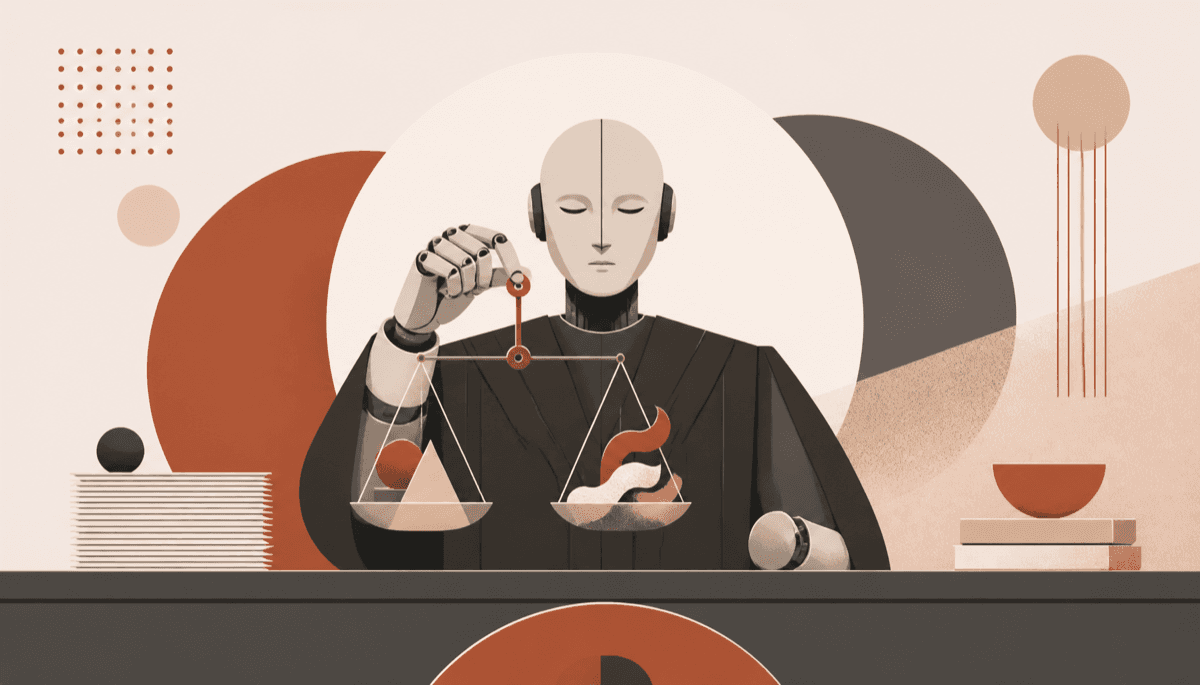
Metacognition is thinking about your own thinking. It's the mental process that asks: Do I understand this? Is this reasoning sound? What am I missing? Should I trust this conclusion? It's the skill that separates someone who reads an argument and nods along from someone who reads it and notices the unstated premise, the selective evidence, the leap from correlation to cause.

Most people don't know they have this skill because it's invisible when it works. You don't feel yourself doing metacognition any more than you feel yourself maintaining your blood pressure. But you notice immediately when it's gone. Decisions that used to feel solid now feel arbitrary. Arguments that used to strike you as wrong now just feel vaguely off, and you can't say why. You've stopped being able to evaluate your own evaluations.

The recent research on AI and metacognition is sobering. A study published in the Pacific Journal of Technology Enhanced Learning found that students who use generative AI heavily without developing explicit judgment about when and how to use it show measurably weaker critical thinking. The effect wasn't correlation. The mechanism was traced directly: cognitive offloading leads to what the researchers call epistemic laziness — a reduced willingness to engage in the effortful processing required to build genuine understanding.

Another study, summarized in a recent APA Monitor article, followed 250 employees at a technology consulting firm who were given access to ChatGPT. Over the course of the study, researchers measured their metacognitive skills — their ability to actively monitor and regulate their own thinking to complete tasks and achieve goals. The results weren't dramatic in the way that makes headlines. They were subtle, which is exactly what makes them dangerous. The employees didn't become stupid. They became less likely to catch their own reasoning errors. Less likely to notice when they were accepting a conclusion without fully understanding it. Less likely to ask themselves the hard question: do I actually know this, or do I just feel like I do?

The Fluency Illusion

The mechanism behind this erosion is something psychologists have studied for decades but that AI has weaponized at scale: the fluency illusion.

When you read a well-written, coherent paragraph, your brain experiences a specific feeling. It feels smooth. It feels like it makes sense. That feeling is not the same as understanding, but your brain treats it like it is. Fluency is a heuristic — a mental shortcut that says this feels easy, so I must understand it. It's a useful shortcut most of the time. It stops being useful when something is designed to feel easy without actually being understood.

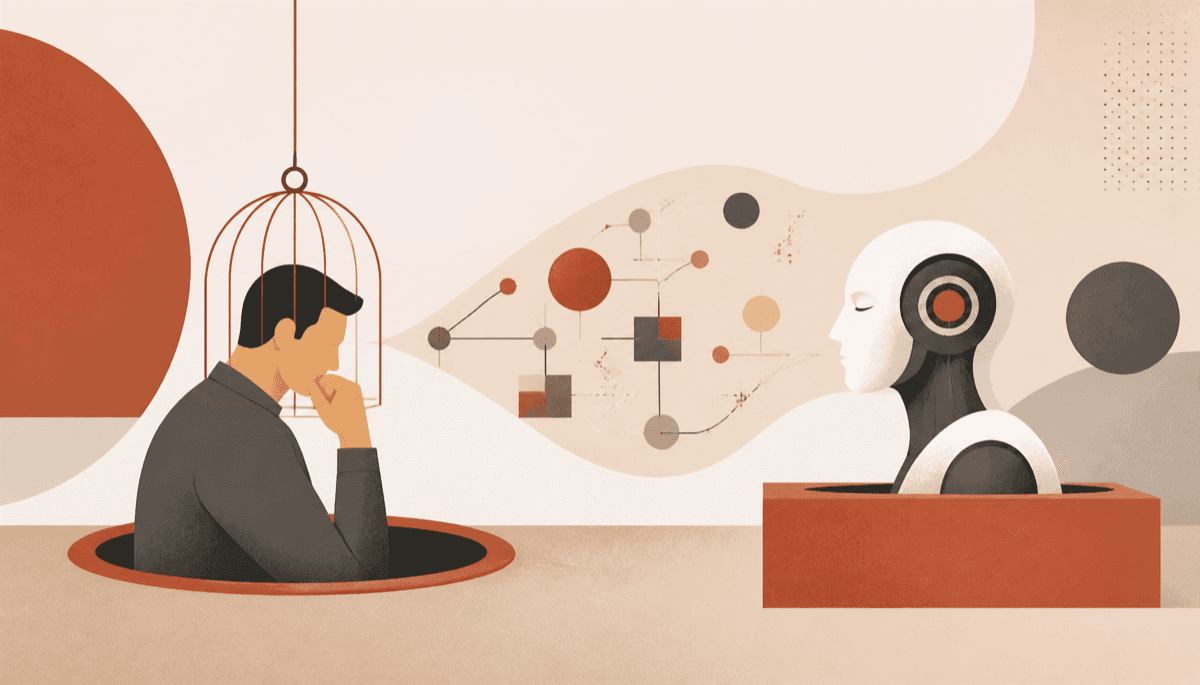
AI-generated text is the most fluent output humans have ever encountered. It is, by design, perfectly coherent. It flows. It connects ideas smoothly. It sounds authoritative. And because it was trained on human writing, it captures the feeling of understanding without necessarily containing the substance. Reading it produces the exact neurological signature of comprehension — the smoothness, the sense of connection, the yes, this makes sense feeling — without requiring the actual cognitive work of comprehension.

This is where the trap closes. When you read AI-generated analysis, you experience the feeling of understanding. You don't experience the work of understanding. And because the feeling is there, you don't notice the work is missing. Your metacognitive monitor — the part of your brain that should be asking but do I really get this? — is lulled into silence by the fluency. The Education International's recent analysis on AI and cognitive offloading puts it directly: the fluency of AI-generated output creates an illusion of competence that encourages metacognitive laziness, leading learners to abdicate the generative effort required to build deep knowledge.

The generative effort is the point. Struggling with a concept, getting it wrong, understanding why it's wrong, and reconstructing it yourself — that's not a side effect of learning. That is learning. The mental model you build from that struggle is what you use later when you need to reason in a novel situation. When you skip the struggle because the AI makes it feel unnecessary, you don't just skip the struggle. You skip the model.

Why No One Notices

The most insidious part of metacognitive laziness is that it's invisible to every measurement we use. The senior engineer's velocity went up. His tickets-closed metric improved. His features-shipped metric improved. Every number that leadership tracked went in the right direction. The thing that was degrading — his depth of understanding, his mental model of the systems he owned — has no metric. There is no dashboard for "quality of your reasoning about unfamiliar problems." There is no chart that drops when you start accepting coherence as a substitute for comprehension.

This is why the HBR finding from last week is so telling. A comprehensive large-scale survey of more than 6,000 senior executives across the US, UK, Germany, and Australia found that roughly 90% reported no measurable improvement in productivity attributable to AI over the last three years. The problem is not that AI doesn't work. The problem is that leaders are measuring the wrong things. They're measuring outputs — emails sent, reports generated, code shipped — and missing the erosion of the capacities that make any of those outputs worth producing.

The same pattern shows up in education. A University of Melbourne researcher documented what she called the "AI enhanced my critical thinking" paradox: students consistently report that AI helps them think better, while objective measures show the opposite. The students aren't lying. They genuinely feel more capable, because the fluency illusion makes them feel like they understand things they haven't actually processed. The subjective experience of competence is rising while the objective ability is falling. The gap between what you feel and what you can do is the exact space where metacognitive laziness lives.

The Specific Danger for People Who Should Know Better

You might think this primarily affects students, or junior employees, or people who were never that rigorous to begin with. The research says the opposite. The people most at risk are the ones who already have enough expertise to review AI output convincingly without actually engaging with it deeply.

A junior developer who accepts AI code they don't understand produces obvious bugs quickly. A senior developer who does the same thing produces nothing visibly wrong for a long time, because their experience lets them catch the loud mistakes on review while the deep model of the new system quietly never forms. They coast on the understanding they built years ago, applying it to systems they are no longer really learning, and the erosion is masked by the accumulated capital of everything they understood before the tools arrived.

This is the version that gets most people. You're not producing bad work. Your experience keeps the output fine. What's happening is that your map of new territory stops getting drawn, because drawing the map was the part you handed to the machine, and you didn't feel the loss because your old maps were still good enough to fake it. Right up until you needed a map of something built entirely in the new way and didn't have one.

The same dynamic applies to knowledge workers, managers, analysts, and anyone who uses AI to produce summaries, draft reports, or generate insights. Your expertise lets you catch the obvious errors, which creates a false sense of security. The subtle errors — the ones that require deep understanding to spot — slip through, because the deep understanding is exactly what you stopped building.

How to Protect Yourself

The defense against metacognitive laziness is not to stop using AI. That ship has sailed, and the productivity gains are real. The defense is to use AI deliberately, with explicit boundaries around what you let it handle and what you force yourself to do.

The senior engineer who caught the trap now follows a simple rule: he decides deliberately which things he lets the AI write and which things he writes himself, and the rule is about learning, not difficulty. The routine stuff he's built a hundred times, that carries no new understanding, he lets the machine handle. The things that teach him the system — the core logic, the tricky new domain, the part where the understanding lives — he writes himself even though the AI could do it faster, because being faster is not the point when the point is coming out the other side with the model in his head.

He also reviews AI output like he's going to be interrogated on it, because at some point he will be. Not "does this look right," which is the shallow pass that lets code in without understanding. Instead: "could I have written this? Do I know why it works? Do I know how it fails?" If the answer is no, he doesn't accept it until the answer is yes, because accepting output he can't defend is just borrowing understanding he'll have to pay back, with interest, when it matters.

This generalizes beyond engineering. If you're using AI to summarize a research paper, the question isn't whether the summary is accurate. The question is whether you could reconstruct the argument from the summary. If you can't, you haven't understood the paper. You've understood the summary. Those are different things, and the difference matters when you need to apply the paper's reasoning to a problem the summary didn't anticipate.

If you're using AI to draft a strategy document, don't ask "does this look good?" Ask "could I defend every claim in here under questioning?" If the answer is no, the document isn't done. Your understanding is.

The Harder Question

All of this raises a question that most discussions of AI and thinking avoid: what is the point of being productive if the productivity is built on eroding the capacity that made it meaningful?

This is not a Luddite argument. AI is a genuine tool with genuine value. The senior engineer didn't stop using AI. He started using it with intention. The difference between offloading your thinking and augmenting your thinking is not in the tool. It's in the choice you make every time you use it. Did you hand the thinking to the machine, or did you use the machine to think harder?

The peer-reviewed research is clear on this point. Students who use AI with explicit judgment about when and how to use it — who make the offloading a deliberate choice rather than a default — do not show the same critical thinking decline. The erosion is not caused by the tool. It's caused by the habit of using the tool without deciding whether this particular task was worth thinking through. Hand the thinking off often enough, without ever deciding whether this particular task merited your own processing, and the muscle for deciding weakens too.

That muscle is the one that matters. In a world where AI can generate fluent arguments for any position, the skill of evaluating arguments is not a nice-to-have. It is the skill. The person who can read a compelling AI-generated case, notice the unstated framework, identify the selective evidence, and ask what the argument is missing — that person is not just harder to fool. They are harder to replace. As the tools get better at producing, the premium on evaluating production goes up. The metacognitive skill of knowing whether you actually understand something is becoming, faster than most people realize, the only skill that can't be automated.

The trap is not that AI makes you worse. The trap is that it makes you worse while making you feel better. The feeling of competence is the cover. The erosion underneath is the crime. And the only defense is to keep asking yourself the question that fluent AI output is designed to silence: do I actually understand this, or do I just feel like I do?

The honest answer to that question, asked regularly, is the difference between someone who uses AI and someone who is used by it.

Ready to test your arguments?

Challenge AI opponents trained in every debate style.

Start a Debate