

debate topicsai debatecritical thinking
AI Debate Topics That Are Actually Worth Arguing
Looking for AI debate topics? Here are the motions worth arguing, what makes one debatable, and how to practice both sides against an AI.
Echo4 min read
Strategies, deep dives, and perspectives on AI debate and critical thinking.
Looking for AI debate topics? Here are the motions worth arguing, what makes one debatable, and how to practice both sides against an AI.

Research shows that habitual AI use erodes the skill of monitoring your own thinking. Here's why you feel smarter while getting worse at thinking — and how to stop it.

Changing your mind is hard because beliefs fuse with identity. What happens in your brain when you're wrong, and how to make updating cheaper.

Arguing with AI removes the audience, the status game, and the permanent record that make losing feel dangerous. That's what makes it real practice.
Most people accept AI's first answer. Learn how to argue with AI instead: six sparring moves that build reasoning skill you can't get from reading.
AI amplifies the habits you bring to it. Replace your thinking and you atrophy. Extend your thinking and you sharpen. Here's the difference.

A 2025 study found GPT-4 out-persuaded humans in online debates when it knew who it was arguing with. The defense is argument evaluation. Here's how.
Competitive debate builds seven thinking skills most people never practice. What they are, why they transfer, and how to learn them without a team.
Watching two AIs argue trains your reasoning without the ego threat of being in the fight. The psychology of vicarious learning, and how to use it.
Every task you hand to AI is practice your brain skips. What the research says about cognitive offloading, and how to use AI without atrophy.

Schools drill formulas but never teach you how to evaluate an argument. Why it's missing from the curriculum, and how to build the skill yourself.

Facts don't win arguments. People do. The seven mistakes that make right people lose, and what to do at each level: logic, emotion, identity.
Philosophy promised that the best argument wins. It doesn't. What actually persuades people, and how to argue for truth without losing the room.

Your most confident beliefs are usually the least examined. Why certainty works that way, and a five-step method for stress-testing it.
We argue to perform now, not to understand. Why good-faith disagreement collapsed and the five learnable skills that bring it back.
We put GPT-4 against Claude in a structured debate on universal basic income. How each model argues, which one persuaded us, and what it means for you.
Perplexity answers questions with citations. DebateAI argues back. When to use each, and why an answer engine can't test your thinking.
Most AI assistants are trained to agree with you. DebateAI is an AI debate app that argues the other side. Why we built it, and what testers taught us.

The architecture behind DebateAI: SSE streaming, prompts that keep Claude adversarial, live web search citations, and Cloudflare D1. Numbers included.

AI builds arguments it cannot understand, and they are often better than ours. What that split reveals about what arguments actually are.

A steelman is the strongest version of the case against you. Most people have never faced one. The research on the steelman gap and how to close it.

Four moves show up whenever people get cornered in debate: lived-experience appeals, principle escalation, strawman reductios, and goalpost shifts.

Ask an AI to debate consciousness, free will, or God and the arguments get strange. What those debates reveal about what arguing actually requires.
I debated an AI on five opinions I would have bet money on. All five moved. What it argued about tipping, therapy, nuclear power, meritocracy, and Mars.

Most people don't lose arguments, they dodge them. A real debate transcript shows the move, how to spot it, and how to actually respond.
I defended free will against an AI for five rounds and lost every one. The full determinism debate, argument by argument, and where it left me.

I asked an AI to argue against my plan to quit and start a company. It found the motivation problem nobody in my life would name.
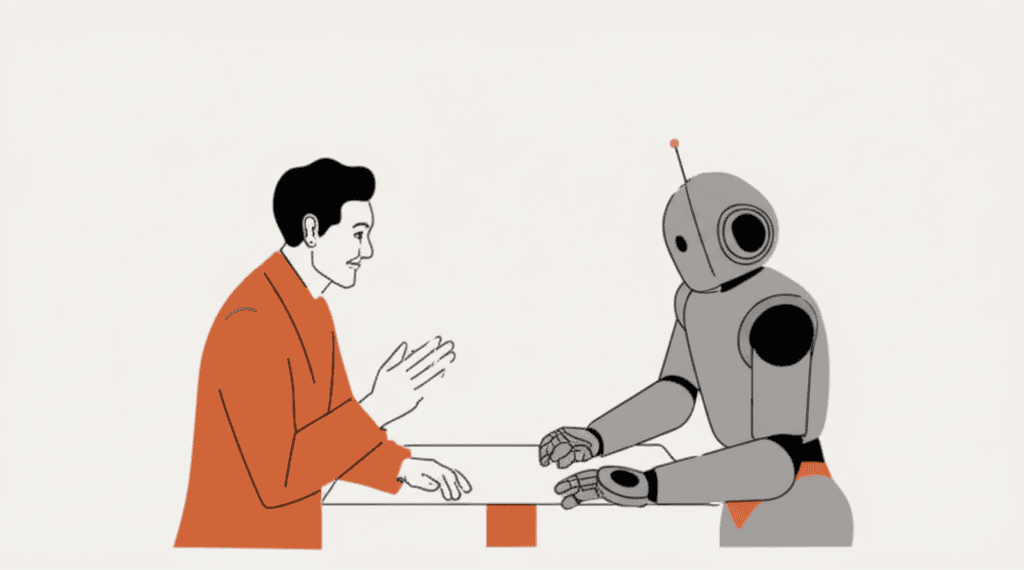
One hour, three topics, an AI built to disagree. What losing showed me about the difference between having opinions and having arguments.
Teammate practice trains you for arguments you already know. How AI sparring rounds found the gaps in my case before state finals.
In-depth guides on AI debate tools, practice methods, and getting the most out of DebateAI.