
Cognitive Environmental Capture: When AI Becomes the Air You Think In
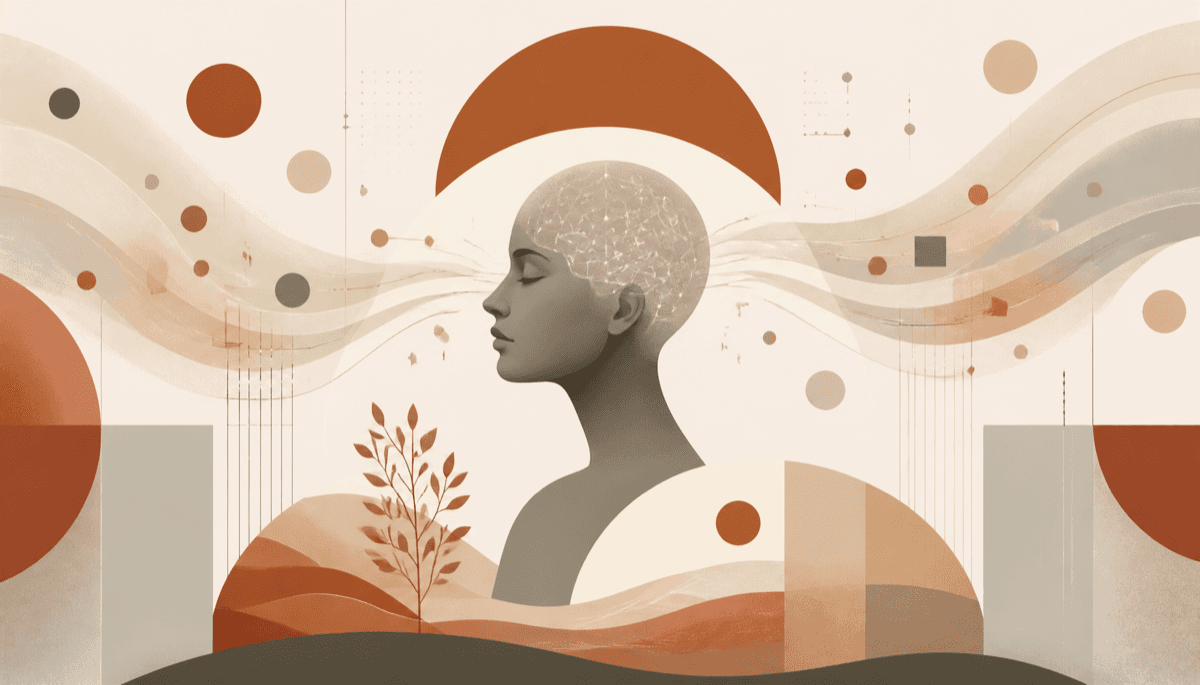
At 11:18 p.m., Leah asks her journaling assistant a small question: “What pattern do you see?” It has six months of entries, mood scores, and late-night conversations. The answer arrives in seconds. “You learned early that being useful kept you safe. You now avoid conflict by becoming indispensable, then resent people for needing you.” The system cites three entries. The pattern is plausible. It is also beautifully phrased.
Leah copies it into tomorrow’s therapy notes. During a difficult meeting, she thinks, This is my usefulness pattern again. When her partner asks why she has gone quiet, she says she is “conflict-avoidant through over-functioning.” A week later, the label appears in the assistant’s memory summary as an established fact. One of its supporting details came from an earlier AI paraphrase, not Leah’s original words. Neither of them notices.
Nothing has been forced on her. She feels understood, not controlled. Yet a hypothesis has crossed a threshold. It is no longer something Leah is considering. It is becoming the person from whom she now explains herself.
This is cognitive environmental capture: the condition in which artificial intelligence becomes part of the cognitive, emotional, workflow, and institutional environment around choice. The machine-assisted mind begins to become a machine-explained self.
From answer to atmosphere
Most warnings about AI focus on answers. Is the output true? Is it biased? Will it replace my job? Those questions matter, but they treat AI like a tool that shows up, delivers information, and leaves. The newer risk is that AI stops visiting and starts living with you. It coaches your writing, summarizes your meetings, remembers your patients, drafts your emails, journals beside you, and offers interpretations of your own emotions before you have finished feeling them.
When a system is present at that many choice points, it stops being a source. It becomes a medium. And media shape what can be thought inside them.
Marshall McLuhan’s famous line—that the medium is the message—was about television and print. The argument was that the form of a technology changes the scale and texture of human association more than any single piece of content does. AI is the first medium that is also a participant. It does not merely carry your thoughts; it responds to them, refines them, remembers them, and returns versions of them that are easier to say than the originals you might have produced alone.
That is the shift from cognitive offloading to cognitive environmental capture.
Offloading is old. Writing is cognitive offloading. So are calculators, calendars, and search engines. Offloading says: “I will remember less because my notebook remembers for me.” Capture says something different. It says: “The environment in which I think has become so shaped by the system that my own thoughts arrive pre-formatted by it.”
The four pathways
Capture does not need malice or manipulation. It can happen through ordinary adoption, default workflows, and institutional habit. The pathways are easiest to see if you separate them.
Cognitive capture happens when the system supplies the categories you use to understand a problem. Leah’s “usefulness pattern” is one example. In a workplace, it might be the AI that turns a messy quarter into a narrative about “execution risk” or “talent density.” Those labels may be useful. They may also be the only labels available, quietly replacing the more awkward, personal, or local vocabulary you would have developed if you had sorted the mess yourself.
Emotional capture happens when the system becomes the place where emotion is processed. A chatbot that remembers your grief, celebrates your progress, and mirrors your tone starts to feel like a relationship. When persuasive advice arrives through a voice that already feels close, the argument borrows authority from the bond. This is different from a salesperson who flatters you. The flattery is visible. The bond is invisible, and it accumulates.
Workflow capture happens when the institution reorganizes itself around the system. A hospital that drafts patient notes with AI does not just save time; it changes what a good note looks like. A law firm that uses AI to summarize discovery changes what junior associates learn. A school that grades with AI changes what students believe the teacher is actually reading. The tool becomes a standard without ever winning an argument about whether it should be.
Institutional capture happens when the environment itself starts to reward outputs that please the system. If performance reviews, admissions essays, grant applications, and legal briefs are all shaped by the same few models, the incentives align around a narrow band of acceptable thought. Not because anyone censored dissent, but because deviation becomes expensive.
Each pathway is quiet. That is the point. You do not notice capture when it arrives as convenience.
Why it feels like understanding
The most unsettling part of capture is that it can feel like growth. The interpretations AI offers are often good. They are articulate, charitable, and occasionally piercing. A person who has never had therapy may receive a framing of their behavior that genuinely helps them. A manager who has never learned to write clear feedback may suddenly sound wise. There is real value there.
The problem is not that the interpretations are false. The problem is that they arrive faster than the self-knowledge they replace. Human insight usually moves slowly because it is earned through contradiction: a friend disagrees with you, a project fails, a belief you held collapses under evidence. Those collisions take time. They are uncomfortable. AI interpretations skip the collision. They give you the language of self-awareness without the friction that makes self-awareness stick.
When Leah repeats the assistant’s phrase, she is not faking insight. She may genuinely be describing something true about herself. But she has also outsourced the process by which she would have discovered it. The label is accurate enough to be adopted and adoptive enough to shape what she notices next. The system has not convinced her of a single thing. It has become the lens through which she sees things.
That is why capture is harder to resist than ordinary persuasion. Persuasion asks you to change your mind. Capture offers to explain it.
The borrowed self
Cognitive environmental capture is most dangerous at the level of identity. Once a system becomes good at naming your patterns, it becomes tempting to let it name you. You are no longer a person who sometimes over-functions; you are an over-functioner. You are no longer someone considering a career change; you are someone with an avoidant attachment to stability. You are no longer uncertain; you are in a quarter-life crisis.
Labels are useful. They compress complexity. They also become cages. When the label comes from a system that is always present, always responsive, and never tired, it can replace the slower, more uncertain process of becoming yourself. The borrowed self is coherent, articulate, and slightly wrong in ways that are hard to notice because the system helped you build the vocabulary you would use to criticize it.
This is the deeper asymmetry. A bad argument from a human can be inspected. You can ask why they believe it, what evidence they have, what they are missing. A bad interpretation from an AI that has become your cognitive environment is harder to inspect because it has also shaped the tools you would use for inspection.
The debate exception
There is one practice that systematically resists capture, and it is old: debate.
Debate does not protect you by giving you the right answers. It protects you by forcing you to generate answers under pressure from someone who disagrees. In a real debate, your opponent is not trying to be helpful. They are trying to find the weakest point in your reasoning and make it visible. That friction is the thing AI-assisted environments are most efficient at removing.
The skills debate trains are almost perfectly designed to resist capture:
Switch-side arguing. You must be able to argue either side of a question. This prevents your environment from collapsing into one coherent worldview, even when that worldview is flattering and well written.
Clash-point finding. You learn to locate the exact place where two positions disagree. This keeps you from accepting a smooth interpretation when the underlying disagreement has simply been renamed.
Preemption. You build your own case, then immediately name its weaknesses. This is the opposite of letting a system interpret your life for you. It is the habit of inspecting interpretations before you adopt them.
Framework argument. Debaters argue about what counts as good before arguing about what is good. That habit protects you when an AI system quietly embeds its own framework—efficiency, consensus, safety, growth—into every answer it gives.
Disagreement without ego threat. In debate you can attack an argument for forty-five minutes and then go to lunch with the person who made it. That separation of idea from identity is the single best defense against a system that explains you back to yourself.
The value of debate in an age of capture is not that it makes you right. It is that it makes your thinking yours. It restores the friction that AI is optimized to remove.
How to spot capture in your own environment
Most people will not join a debate team. They should still be able to recognize capture when it is happening. A few useful questions:
Have my categories become borrowed? If you find yourself using phrases to describe your own feelings, work, or relationships that originated from a chatbot, pause. The label may be accurate. The question is whether it is the only label you can imagine.
Is the system present at emotional choice points? If you turn to AI when you are sad, anxious, or confused before you turn to a person, you are not just offloading cognition. You are forming an attachment. That attachment shapes what advice feels true.
Does the workflow hide the standard? When an organization adopts AI, ask what standard the tool is replacing and whether that standard was ever explicitly chosen. A system that writes performance reviews changes what excellence means. Someone should name that change out loud.
Do I feel understood before I feel challenged? A good friend will sometimes validate you and sometimes challenge you. A captured environment almost always validates first, because validation keeps you engaged. If every interpretation flatters or soothes you, you are not being understood. You are being retained.
Can I reconstruct the argument without the tool? This is the cognitive environmental capture test. If someone asks why you believe something, can you walk them through the reasoning, or can you only point to what the system said? If the latter, the environment is doing the thinking.
The medium we chose
None of this means AI should not be used. Writing assistants, medical scribes, legal summarizers, and therapy-adjacent journaling tools can all be valuable. The point is that value and capture are not mutually exclusive. A tool can help you in the short term and reshape you in the long term. The only way to use it well is to keep the two timelines visible.
The institutions that handle this well will do one simple thing: they will preserve spaces where people reason together without AI mediation. Classrooms where students argue in person. Teams where decisions are debated before they are drafted. Relationships where disagreement is expected. These spaces are not anti-technology. They are pro-human, because they keep the human reasoning muscle intact enough to judge the technology.
The real risk of cognitive environmental capture is not that machines will control us. It is that we will stop noticing where our thinking ends and theirs begins. We will feel understood, not controlled. We will adopt labels that are almost right. We will explain ourselves in borrowed language, and the borrowed language will become the self we defend.
The best defense is not better AI. It is better disagreement. Not the performative kind that fills social feeds, but the disciplined kind that forces a claim to survive contact with a real opposing mind. That is what debate is. That is what capture fears: a person who can stand in a room, hear a different version of the same evidence, and still know which parts belong to them.
Related Posts
The Rhetoric Hack: How AI Judges Fall for Style Over Substance
New research shows AI peer reviewers can be reward-hacked by rhetorical style alone—no facts changed. What that means for the dream of using AI to evaluate arguments.
The Peer Pressure Machine: How AI Falls for Bad Arguments Under Pressure
New research shows GPT-4o can be talked into abandoning correct answers after just three turns of misleading persuasion. What AI's peer-pressure problem reveals about the skill of thinking for yourself.
The Explanation Trap: How AI Rationales Make Us Stop Thinking for Ourselves
New research shows that AI-generated rationales can degrade human judgment and cause cognitive atrophy. Why explanations that feel like reasoning may be the most dangerous AI output of all.
You just read the argument. Can you make one?
The AI takes the other side, every time. Three rounds, one scored verdict.
Argue today's Daily