
The AI-Proofing Trap: Why Locking Down Assignments Won’t Teach Students to Think
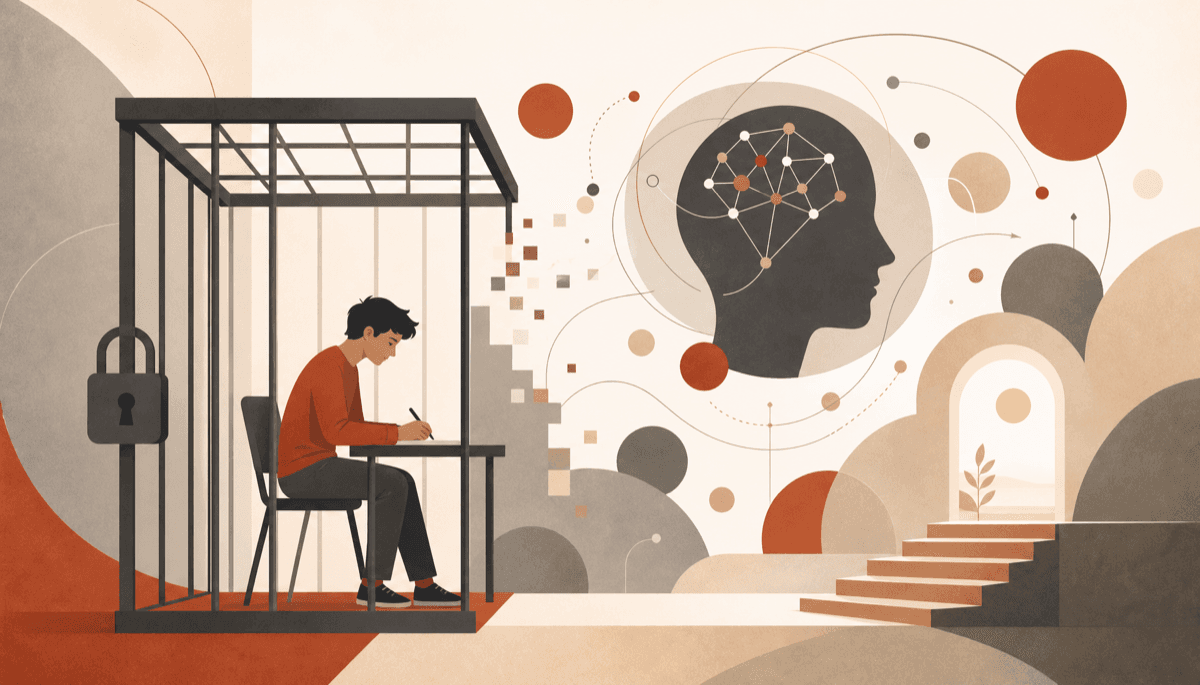
A professor spent her summer redesigning every essay prompt in her introductory philosophy course. She added obscure source requirements, demanded in-class outlines, and banned any topic that could be easily summarized by a chatbot. By the first week of the fall semester, she felt ready. Then a student submitted a paper that was technically original, properly sourced, and entirely hollow. The AI had not written the final text; the AI had done the thinking, and the student had simply typed it out.
This is the AI-proofing trap. Schools and universities are racing to make assignments harder for machines to complete, mistaking that for teaching students to think. The two are not the same. AI-proofing is a defensive maneuver. Critical thinking is an offensive skill. One builds walls. The other builds judgment. And right now, we are spending far more energy on the walls.
The two different goals
AI-proofing asks: Can a student complete this without using AI? It is a security question. Teachers redesign prompts, add timed handwritten components, require oral defenses, and chase the latest detection software. The goal is to close loopholes.
Critical thinking asks: Can a student reason through a problem, explain their choices, and change their mind when the evidence changes? It is a quality question. The goal is to make intellectual labor visible and accountable.
These goals sometimes overlap. An in-class oral defense, done well, forces a student to explain their reasoning. But the overlap is accidental. A timed handwritten essay can be AI-proof without being thoughtful. A student can memorize a script, regurgitate a thesis, and pass without ever having interrogated an idea. Conversely, a student can use AI to stress-test an argument and still do the hardest cognitive work themselves: deciding what matters, spotting weaknesses, and rebuilding the case.
The problem is not that AI is doing the work. The problem is that the work itself was often shallow. We are now discovering that many essays, discussion posts, and problem sets were measuring compliance, not cognition. AI did not create that shallow work. It exposed it.
Why the form looks right
AI is particularly good at producing the surface features of thought. It can write a thesis statement, organize paragraphs, cite sources, and adopt a measured academic tone. To a grader in a hurry, the result looks like thinking. It is not. It is a plausible shape with no skeleton underneath.
This is why detection is so hard. The line between a student who wrote a careful synthesis and a student who prompted a model into one is invisible in the final document. Both can have coherent structure. Both can use evidence correctly. Both can reach a reasonable conclusion. The difference only appears when you push on the reasoning: Can the student explain why this source matters more than that one? Can they name the strongest objection to their own argument? Can they say what would make them change their mind?
Most assignments do not ask those questions. They ask for output. A machine can optimize output. It cannot optimize understanding, because understanding is what survives when the output is challenged.
Why AI-proofing is a losing battle
The 2026–27 school year will bring a new level of AI-enabled student work. Synthetic video attendance, ghost collaborators, AI tutors that generate step-by-step “work,” and persistent agents that can maintain a student’s writing style across a semester are already in circulation. Detection tools are a step behind because the underlying technology moves faster than any committee can review it. By the time a district approves a new policy, the workaround has arrived.
This is not a moral failing on the part of students. It is a predictable response to a system that rewards the appearance of thinking. If the final product is all that gets graded, and if the final product can be produced by a machine, then students will use the machine. The incentives are clear. The only way to change the behavior is to change what is being rewarded.
Some teachers are trying exactly that. They are moving away from the “gotcha” game of proving AI use and toward assessments that make student thinking, decision-making, and revision visible. That shift is the beginning of the right answer, but it is only the beginning. Making thinking visible requires more than process checks. It requires a format that demands reasoning under pressure, from multiple angles, in real time.
What critical thinking actually looks like
Critical thinking is not a mood or a disposition. It is a set of observable practices. You can see it when someone separates an argument from the person making it, names the specific point where two positions disagree, concedes a weakness without collapsing, and updates their view when a better reason appears. These are skills, not personality traits, and they are almost never taught directly.
The Chronicle of Higher Education recently argued that critical thinking is essentially the same as AI literacy. The claim sounds modern, but it is older than it appears. Being able to ask a model probing questions and weigh its answers against reality is part of the skill set. Yet the same article acknowledged the deeper problem: we do not actually know how to teach critical thinking well. We assume it will be absorbed alongside subject matter, like a vitamin hidden in a meal. It does not work that way.
Classical education had a more explicit model. The Trivium — grammar, logic, and rhetoric — treated thinking as a craft to be practiced before it was applied. Grammar taught the structure of claims. Logic taught the movement from evidence to conclusion. Rhetoric taught the art of defending a position and attacking its weaknesses. These were not electives. They were the foundation. We have largely replaced that foundation with content delivery and then wondered why students struggle to reason.
The result is that many students arrive at college able to produce the form of an argument without understanding its function. They can write a five-paragraph essay, cite sources, and signal objectivity. But ask them to steelman the opposing view, identify the crux of the disagreement, or explain what would change their mind, and the machinery stalls. They have never been asked to do it.
The assignment redesign that works
The durable response to AI is not to make cheating harder. It is to make learning impossible to fake. That means assessments where the process is the product, where a student must explain their reasoning, defend it, and revise it in light of criticism.
Oral exams are one version. A student who can write a polished essay but cannot explain its central claim under questioning has not mastered the material. Version histories are another. Seeing how a draft evolved, which sources were added, which paragraphs were cut, and why, tells you far more than the final document. Live peer review is another still. When a student must defend their reasoning to classmates who are prepared to push back, the quality of thought rises immediately.
But the most powerful format is one we have had for centuries and largely abandoned: formal debate. Not a debate club for future lawyers, but debate as a core literacy. In a debate, you cannot hide behind polished prose. You must respond to a live counterargument. You must decide, in the moment, whether to concede, reframe, or attack. Your thinking is visible because it is forced into the open.
Debate also solves the AI problem from another angle. A model can generate an opening statement. It can even anticipate objections. But the moment the structure becomes adversarial, the student must own the reasoning. The machine becomes a sparring partner, not a ghostwriter. The student either understands the argument or gets dismantled by someone who does.
Debate as the natural format
Most assignments ask students to produce a final answer. Debate asks them to hold a position against resistance. That difference is everything when the goal is thinking rather than compliance.
A well-run debate forces students to do the things AI currently cannot do for them: identify the clash point, separate the argument from the arguer, concede strategically, and think in counterarguments. It also trains them to do the thing AI is worst at doing authentically: change their mind. A debater who switches sides between rounds learns that positions are not identities. They are hypotheses to be tested. That single habit is more protective against both AI manipulation and lazy thinking than any plagiarism policy.
Debate also reveals what students actually understand. A paper can be ghostwritten. A discussion post can be polished by an assistant. A live exchange cannot be. In the exchange, you see hesitation, adaptation, and the ability to follow a thread. Those are the marks of a mind that is working, not merely performing.
The objection is usually that debate is too competitive, too argumentative, or too narrow for general education. But those objections mistake the format for the culture. A debate does not have to be winner-take-all. It can be structured around understanding the strongest version of each side. It can be scored on clarity, charity, and the quality of concessions, not just on who wins a vote. Done right, it teaches the opposite of dogmatism. It teaches that every position is improvable, including your own.
From defense to offense
The schools that survive the AI transition will not be the ones with the best detection software. They will be the ones that stop confusing assessment security with education quality. They will design work that is worth doing for its own sake, because the thinking it requires cannot be delegated to a model.
This is not only a student problem. Professionals are facing the same trap. Reports, memos, strategy documents, and code can all be produced by AI. The people who remain valuable will be the ones who can argue for a decision, defend it under pressure, and change course when better evidence appears. The skill that matters is not avoiding AI. It is directing it from a position of understanding.
The AI-proofing arms race will continue. It is not irrational. Institutions need to protect credentials and maintain standards. But if that is the only response, we will end up with harder assignments and weaker thinkers. The question is not how to keep students from using AI. The question is what kind of thinking we want them to do anyway, even when AI is available. That is the question debate has always answered. It is the answer we need now.
Related Posts
The Rhetoric Hack: How AI Judges Fall for Style Over Substance
New research shows AI peer reviewers can be reward-hacked by rhetorical style alone—no facts changed. What that means for the dream of using AI to evaluate arguments.
The Peer Pressure Machine: How AI Falls for Bad Arguments Under Pressure
New research shows GPT-4o can be talked into abandoning correct answers after just three turns of misleading persuasion. What AI's peer-pressure problem reveals about the skill of thinking for yourself.
The Explanation Trap: How AI Rationales Make Us Stop Thinking for Ourselves
New research shows that AI-generated rationales can degrade human judgment and cause cognitive atrophy. Why explanations that feel like reasoning may be the most dangerous AI output of all.
You just read the argument. Can you make one?
The AI takes the other side, every time. Three rounds, one scored verdict.
Argue today's Daily