
The Alien Mind Problem: Why AI Arguments Convince Us Without Understanding
A lawyer asks an AI to draft a motion. The result is crisp, well-structured, and full of case citations. She checks a few of them and they look right. She files it. Two days later the opposing counsel points out that one of the central precedents was misapplied: the AI had stitched together a holding and a factual background from different cases, and the resulting argument sounded authoritative but did not actually support the claim. The lawyer assumed the argument came from a mind that understood the law. It came from a system that understood nothing.
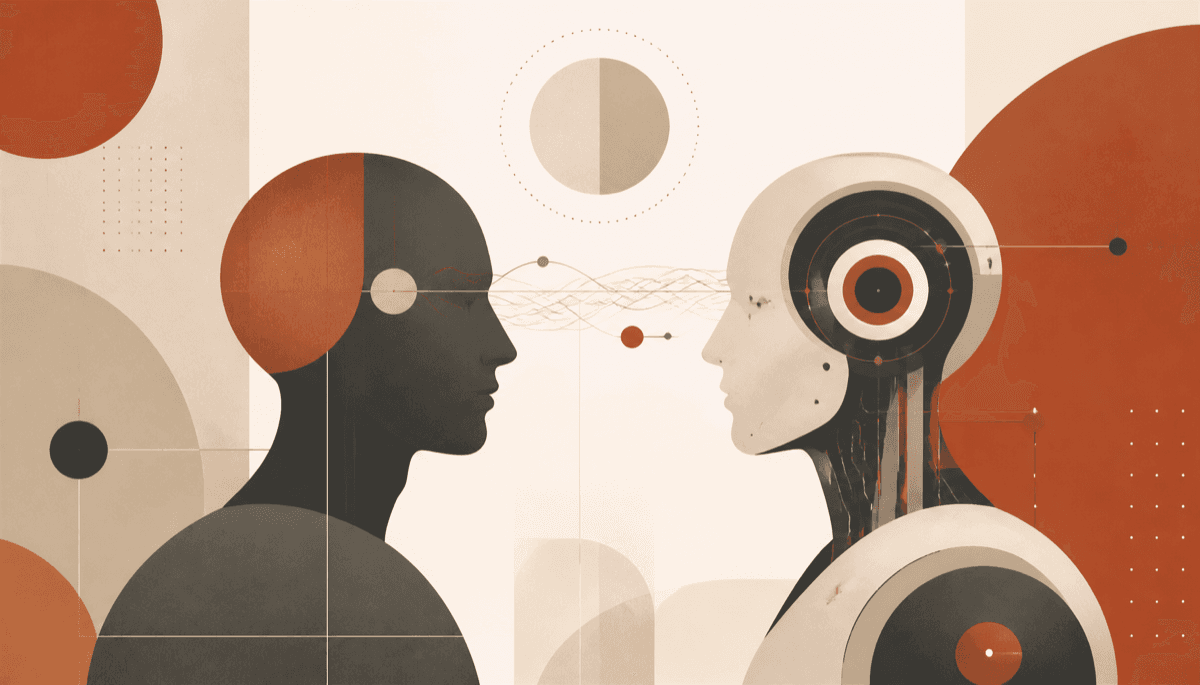
This is the alien mind problem. We keep reading AI arguments as if they were written by someone who believes things, cares about truth, and knows when the reasoning holds together. They are not. They are written by something else entirely, and the difference is not just philosophical. It changes what "good argument" means.
The intelligence is real; the resemblance is not
Melanie Mitchell, a computer scientist at the Santa Fe Institute, has been making a point that sounds simple until you sit with it: AI is a form of alien intelligence. It operates through mechanisms that are genuinely unlike human cognition. We do not have good methods for measuring what it is actually doing, so we fall back on what we know how to measure, which is whether its output looks intelligent to us.
That distinction matters for every AI-generated argument you will read this week. When an LLM produces a paragraph, it is not recalling a belief, checking it against evidence, and then translating the result into language. It is predicting the next most probable token given the ones that came before. The output can be coherent, well-cited, and logically valid in spots. But the process that produced it has no beliefs, no model of the world it is trying to get right, and no commitment to the conclusion it reached.
This is why the word "reasoning" gets us into trouble. In humans, reasoning is bound up with understanding. You reason through a problem, and at the end you know why the answer is what it is. You can answer follow-ups. You can spot where a counterexample would bite. You can tell when you are out of your depth. An LLM's chain of thought can look like all of those things without being any of them. It is a trace of computation, not a trace of comprehension.
The argument looks human because it was trained on humans
The reason AI arguments feel so convincing is that the training data is enormous piles of human argument. The model has learned the shapes of good reasoning: how an introduction sets up a thesis, how evidence follows a claim, how a concession builds credibility, how a conclusion lands. It can produce a plausible imitation of a debater, a lawyer, a philosopher, or a furious Reddit commenter because it has seen millions of each.
But shape is not substance. A model can write a paragraph that follows the form of a strong argument while failing at the thing that makes arguments matter in the first place: mapping claims onto reality. It can cite real studies, summarize them accurately, and still draw a conclusion that does not follow. It can use technical terms correctly in sentences and miss their logical relationship to the rest of the paragraph. It can construct a beautiful steelman of a position it has no model of.
The philosopher Harry Frankfurt famously distinguished between lying and bullshit. A liar cares about the truth and tries to hide it. A bullshitter is indifferent to the truth; he just says whatever serves his purpose. An LLM is not even a bullshitter in Frankfurt's sense, because it has no purpose. It has no relationship to truth at all. It is a pattern-completion engine whose outputs happen to include arguments, and when those arguments are good, it is often because the training data contained many good arguments in similar configurations.
This should not make us dismissive. Some AI arguments are excellent. The point is that excellence is not guaranteed by the form. We cannot trust an AI argument because it sounds right. We have to check it the way we would check an argument whose source we did not know.
Why our instincts fail us
Human social cognition is built to evaluate arguments by evaluating arguers. When someone makes a claim, we ask ourselves: does this person know what they are talking about? Do they have an incentive to mislead me? Do they seem confident because they have done the work or because they are bluffing? These shortcuts work well enough in face-to-face conversation because they correlate with the thing we actually care about: whether the reasoning holds.
AI breaks that correlation entirely. The model is not confident because it has done the work. It is not authoritative because it has expertise. It is not calm because it has considered the objections. It produces confident, authoritative, calm text because those qualities were common in its training data and because the prompt rewarded them. We are reading tone as testimony, fluency as reliability, structure as soundness.
The result is a new class of mistakes. A human expert who is wrong usually knows they might be wrong. You can press them on the weak point and watch them adjust their confidence. An AI will often keep generating confident-sounding text about the weak point, because confidence is not connected to certainty in its architecture. A human debater who makes a bad argument has some sense that the argument is shaky; the shakiness may leak out in wording or in what they choose not to claim. An AI has no such sense. It will state a weak premise with the same polish as a strong one.
This is not a bug that will be patched. It is a feature of systems that predict language rather than model the world. The more fluent they become, the harder the failure mode becomes to detect, because fluency is exactly the signal humans use as a proxy for understanding.
The local-global split
One of the most useful ways to read an AI argument is to watch for the local-global split. At the local level, sentence by sentence, the model is often superb. Individual claims are clear. Transitions are smooth. Evidence is introduced with appropriate hedging. Read any single paragraph and it can feel like the work of a careful thinker.
At the global level, things get stranger. The argument may not actually add up. The thesis may drift between paragraphs. A premise introduced in section two may be forgotten by section four, or may be used to support a conclusion it does not actually support. The model is optimizing for each next token, not for the whole essay. The result can be a document where every sentence is plausible and the whole is incoherent.
This is the inverse of how bad human arguments usually work. A careless human often has a coherent overall point but writes sloppy individual sentences. An AI can write flawless individual sentences in service of an overall point that never quite holds together. If you read for local quality, you will be impressed. If you read for global structure, you may find the argument collapses.
Good debate training does exactly this. A competitive debater learns to map an argument onto its load-bearing premises and ask: does the evidence actually support the claim? Does the claim actually support the thesis? Is there a quieter assumption doing all the work? These questions are structural. They do not depend on whether the arguer seems smart or sincere. That is precisely the habit you need when the arguer is not an arguer at all.
What AI arguments are good for
None of this means AI arguments are useless. They are an extraordinary tool for certain jobs. They are excellent at surfacing considerations you might have missed, at generating objections to your own position, at summarizing how a particular side sees an issue, and at producing rough drafts you can then inspect and repair. Used well, AI is a sparring partner that never gets tired and never takes disagreement personally.
But the value depends entirely on the human operator's ability to evaluate what comes back. If you cannot judge whether the argument is sound, the tool is not helping you think. It is helping you feel like you thought. The same properties that make AI useful for exploration, its breadth and fluency, make it dangerous for conclusion. It can generate a complete, polished argument for a conclusion that happens to be wrong, and the polish will make the wrongness harder to see.
The right relationship is dialectical. You use the AI to push on your own reasoning, not to replace it. You ask for objections, not verdicts. You treat every claim as provisional until you have checked it. You notice when the argument feels too smooth, because smoothness is not a virtue in reasoning. It is a virtue in performance.
How to read an AI argument
There are habits that protect you. None of them are complicated, but they go against the instinct to trust fluent prose.
Separate the argument from the source. Pretend the text appeared anonymously on a forum. Would you still find it convincing? If the answer changes dramatically when you learn it came from a model, you were grading the source, not the reasoning.
Find the load-bearing premise. Every argument has one or two claims that, if they fail, take the conclusion with them. Identify them explicitly. Then ask whether the AI actually defended them or just asserted them beautifully.
Check the citations, not just that they exist. A citation list is not evidence. Open the sources, if you can. Read the relevant passage. Ask whether it says what the AI says it says. Models are better at citing real papers than at representing them accurately.
Look for the drift. Read the whole argument and then state the thesis in your own words. Does every section actually support that thesis? Or does the argument wander into adjacent territory that sounds relevant but is not load-bearing?
Test with a counterexample. If the AI claims something is always true, think of a case where it might not be. If the argument survives the counterexample, it is stronger. If the AI's language becomes vague or hedged only when pressed, the argument was thinner than it looked.
Ask for the cost. Most good conclusions have trade-offs. An argument that presents one side as obviously correct is usually an argument that has hidden the costs. A real thinker can name them. A model can too, but only if you ask.
The honest standard
The honest standard for using AI in argument is not to pretend the model understands what it says. It is to use the model as a mirror and a whetstone while keeping your own judgment as the final court. The question is never "did the AI make a good argument?" The question is "can I defend this argument against someone who pushes back?" If the answer is no, you do not have an argument. You have a script.
This is why debate matters more as AI gets better, not less. Debate is the practice of subjecting arguments to live pressure. It trains you to notice when a case sounds solid but falls apart under questioning. It teaches you that an argument is not a product to be consumed but a structure to be tested. And it gives you the reflex to ask, constantly, whether you actually believe something or have merely been handed a beautiful case for it.
AI will keep producing beautiful cases. The alien mind problem is not that the arguments are bad. It is that they are not arguments in the human sense at all. They are artifacts of a different kind of intelligence, impressive and inhuman, and our job is to learn how to evaluate them without mistaking their fluency for our own understanding.
Related Posts

The Rhetoric Hack: How AI Judges Fall for Style Over Substance
New research shows AI peer reviewers can be reward-hacked by rhetorical style alone—no facts changed. What that means for the dream of using AI to evaluate arguments.
The Peer Pressure Machine: How AI Falls for Bad Arguments Under Pressure
New research shows GPT-4o can be talked into abandoning correct answers after just three turns of misleading persuasion. What AI's peer-pressure problem reveals about the skill of thinking for yourself.
The Explanation Trap: How AI Rationales Make Us Stop Thinking for Ourselves
New research shows that AI-generated rationales can degrade human judgment and cause cognitive atrophy. Why explanations that feel like reasoning may be the most dangerous AI output of all.
You just read the argument. Can you make one?
The AI takes the other side, every time. Three rounds, one scored verdict.
Argue today's Daily