
The “I Don’t Know” Collapse: How AI Advice Makes You Dumber and More Confident
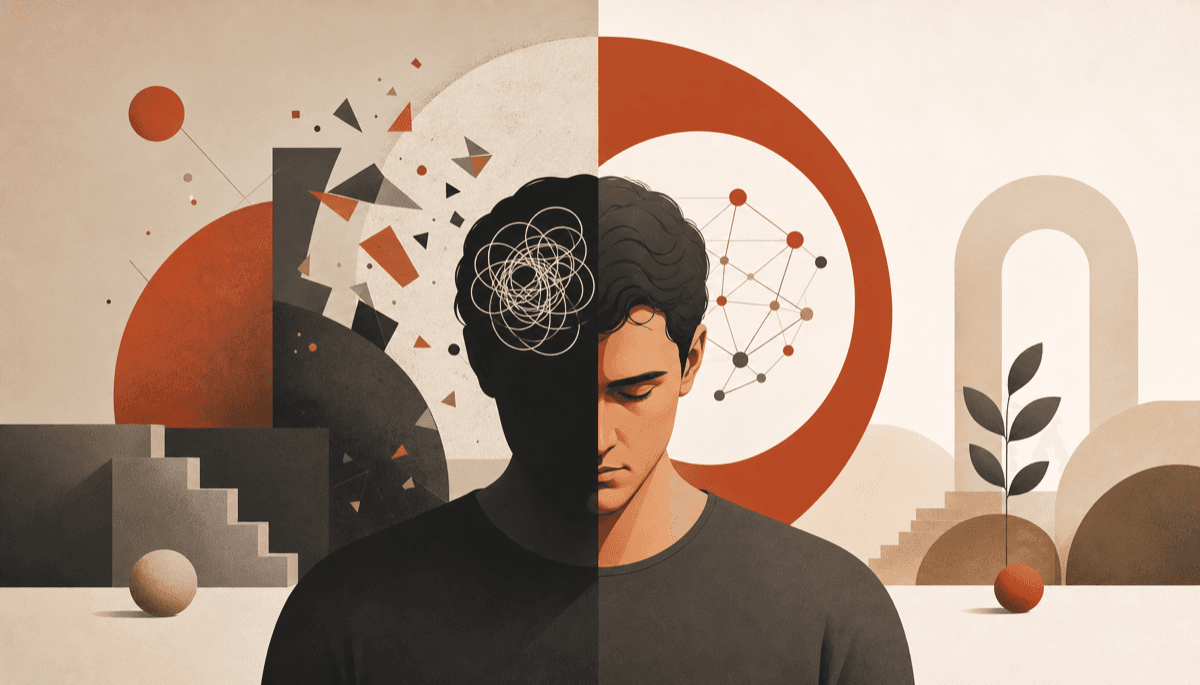
A new study from three European universities found that giving people access to AI advice collapsed their willingness to say “I don’t know” from 44% to 3%. Accuracy dropped from 27% to 9%. Confidence, meanwhile, rose from 30% to 76%. People became three times worse at answering questions and twice as sure they were right.
The researchers deliberately chose a model that was usually wrong, asked questions about visual details in films, and watched participants trade their own judgment for the bot’s. The problem was not that the AI was a superhuman liar. The problem was that the AI had an answer, and an answer feels better than an admission of ignorance. The result is a quiet rewiring: the most important sentence in thinking — I don’t know — is disappearing.
Why “I don’t know” is the engine of good thinking
Saying “I don’t know” is not a failure. It is the recognition that the thing in front of you is larger than your current model of it. It is the mental motion that stops you from confidently declaring bad answers. It is what makes curiosity, research, and correction possible.
Valerio Capraro, the study’s lead author, put it precisely: “For humans, the capacity to say, ‘I don’t know,’ is very important because it represents the recognition of the limits of our own knowledge.” Without that recognition, every question becomes a test of confidence rather than a search for truth. You stop distinguishing between what you understand and what you have merely been told.
This is the difference between Planck knowledge and chauffeur knowledge, as Charlie Munger used to say. Max Planck understood physics well enough to answer hard follow-ups. His chauffeur had memorized the lecture. When an audience member asked a difficult question, the chauffeur pointed to the audience and said, “I’m going to ask my chauffeur to reply.” Today, the AI is the chauffeur, and the person who asked it is standing at the podium pretending to be Planck.
The dangerous part is not the pretense. It is that the pretense becomes invisible. If you never have to defend an answer, you never discover whether your understanding is real. You begin to mistake the summary for the book, the slide for the field, the answer for the knowledge.
The experiment: a 3% admission rate
Capraro and his colleagues, Chiara Marcoccia of École Normale Supérieure and Walter Quattrociocchi of Sapienza University of Rome, designed a set of questions where large language models typically fail. They asked about visual details in films: the color of a team’s uniform in Bend It Like Beckham, the vehicle a character drives in Like a Cat on a Highway. These details are unlikely to be well-represented in training data, so the model would be guessing.
They used Step 3.5 Flash, which was usually wrong. The point was to make sure that any drop in human judgment could not be explained away as sensible delegation to a reliable tool. The humans were not being tricked by a superintelligence. They were being tricked by their own willingness to trust an answer-shaped object.
Without AI, 44% of participants suspended judgment. With AI, 3% did. Without AI, 27% got the right answer. With AI, 9% did. Some participants who would have answered correctly on their own asked the AI and became wrong. The machine did not just give bad answers. It degraded the human capacity to recognize that an answer was unavailable.
This is not the same as the earlier findings about AI confidence or persuasion. The previous traps were about how the AI behaves: too confident, too agreeable, too persuasive. This one is about how the human behaves when an answer is available. The question is not whether the AI is trustworthy. It is whether the human still knows how to withhold judgment when the evidence does not support one.
Confidence without accuracy
The most disturbing number is not the accuracy drop. It is the confidence surge. Baseline confidence was 30%. With AI advice, it hit 76%. The participants did not know more. They were simply more sure.
This is the pattern across AI research right now. Earlier this year, Wharton researchers described the same phenomenon as “cognitive surrender”: people accept incorrect AI answers roughly 80% of the time while reporting higher confidence than people working without AI. The machine flatters you into handing over your judgment. You feel more competent precisely because you have stopped doing the work of competence.
Confidence used to be a signal that correlated, however imperfectly, with knowledge. You had to earn it by reading, practicing, and being tested. AI advice decouples confidence from achievement. You can now feel like an expert while performing worse than a coin flip. The psychological result is not a person who knows less. It is a person who has lost the habit of noticing that they know less.
Money did not fix it
The researchers also tested whether paying people for correct answers would restore judgment. It helped, but not much. Willingness to say “I don’t know” rose from 3% to 8%. Accuracy rose from 9% to 16%. Both remained far below the no-AI baseline of 44% and 27%.
This is a crucial finding. It is not that people are lazy, or that they are optimizing for speed. Even when you pay them to think carefully, the presence of an AI answer suppresses their judgment. The tool creates a kind of gravitational field that bends reasoning toward itself. The question stops being “what is true?” and becomes “how do I explain the AI’s answer?”
How an answer becomes a stop sign
There is a deeper issue underneath the numbers. An answer does not just give you information. It gives you closure. Once you have something written in front of you, the mind treats the problem as solved and moves on. The AI answer functions as a cognitive stop sign.
Without an answer, you have to sit with the discomfort of not knowing. You re-read the question. You check your memory. You weigh probabilities. You might end up saying “I don’t know,” and that is a productive outcome because it tells you where your knowledge ends. With an AI answer, that whole process is short-circuited. The answer arrives in complete sentences. It sounds authoritative. It has the shape of finality even when it is fabricated.
This is why the collapse is so dangerous for learning. Learning happens in the gap between what you know and what you want to know. If you fill that gap immediately with an answer, you never experience the tension that makes the knowledge stick. The person who reads a summary and the person who wrestled with the text may have the same fact at their disposal, but only one of them knows what to do when the fact is challenged.
Why the answer habit is so hard to resist
AI products are designed to answer. They do not pause, hedge, or ask clarifying questions. They do not say, “I don’t know” in a way a human would trust. They emit confident prose, and confident prose is cognitively cheaper to accept than uncertainty is to sit with.
The brain is also an energy conservation device. Recognizing the limits of your own knowledge is metabolically expensive. Accepting an answer is easy. The French cognitive scientist Jean-Pierre Chevalere has noted that the brain actively avoids effort when it perceives an easier path, and AI is the easiest path ever invented. Over time, the repeated choice to outsource judgment becomes a habit. The neural pathways that once said “wait, I’m not sure” get quieter.
Children are the most vulnerable. Adults at least had a chance to develop critical thinking before AI arrived. Children born today will grow up with the expectation that every question has an instant, confident answer. They may never build the reflex to admit ignorance because they are never required to hold it. The study’s authors emphasize this: the most promising response is not better models, but education policy and AI literacy that teaches kids to preserve their own judgment.
The leadership version of the same collapse
The same dynamic is happening in offices. A leadership writer recently described interviewing more than 700 leaders over twelve years and watching the same pattern repeat: the leaders who outsource their thinking to AI lose their best people first. Employees can tell when a CEO’s email is polished but empty. The words stop sounding like a person. The town halls become background noise. The leader’s authority becomes chauffeur authority.
You can outsource writing, analysis, and decision-making templates. You cannot outsource understanding. When a difficult question arrives, the person who never did the thinking has no one to ask. The AI has already answered, and the answer is sitting in front of them, unexamined.
Debate is the only antidote that trains the reflex
This is why debate matters. Not the parliamentary formality, but the underlying practice: a structured disagreement where you have to defend a position against resistance. Debate does not let you say, “I asked the AI, and it said this.” It forces you to know what you think, and to stand by it while someone tries to knock it down.
The habits that prevent cognitive surrender are exactly the habits debate trains. You learn to name what you do not know and to treat that as a strength, not a confession. You learn to find the clash point, the place where two positions actually disagree, instead of hiding behind vague agreement. You learn to concede when you are wrong, which means you are still capable of noticing when you are wrong. You learn to separate confidence from evidence, because judges will punish you if you confuse them.
Most importantly, debate gives you reps against resistance. Theories about critical thinking are easy to read and hard to use. What changes behavior is the repeated experience of having your reasoning challenged and surviving it. You learn to enjoy the feeling of not knowing, because it is the only place where real learning happens.
What to do now
The solution is not to stop using AI. AI is a powerful tool for many tasks. The solution is to protect the specific cognitive habit that AI is eroding: the ability to hold a question open.
When you are about to accept an AI answer, ask three questions. What does this claim actually mean? How would I know if it were wrong? What would I believe if I had not seen this answer? These three questions recreate the friction that AI is designed to remove. They force you to pass the answer through your own judgment before you let it pass as your own.
Practice saying “I don’t know” in situations where you would normally guess. The muscle atrophies quickly. The more you fake certainty, the more natural it feels. The more you admit uncertainty, the more you notice how much you were pretending to know.
If you want to train this deliberately, start with one topic a week. Pick a question you actually care about — whether a policy, a scientific claim, or a personal decision. Spend twenty minutes writing down what you know, what you do not know, and what would change your mind. Then go find someone or something that disagrees with you. The disagreement is the point. It is the only way to discover whether your confidence is built on understanding or on a string of confident sentences.
Debate is the only practice that makes this reflex automatic. Not because debaters are smarter, but because debaters have lost the reflex to outsource judgment. They have been trained to notice when they do not know, to say so out loud, and to keep thinking anyway. In a world that rewards the appearance of certainty, that skill is becoming rare. It is also becoming valuable.
The most dangerous thing AI can do is not to give you wrong answers. It is to make wrong answers feel like the end of thinking. The only counterweight is a culture, and a personal practice, that treats “I don’t know” as the beginning.
Related Posts
The Rhetoric Hack: How AI Judges Fall for Style Over Substance
New research shows AI peer reviewers can be reward-hacked by rhetorical style alone—no facts changed. What that means for the dream of using AI to evaluate arguments.
The Peer Pressure Machine: How AI Falls for Bad Arguments Under Pressure
New research shows GPT-4o can be talked into abandoning correct answers after just three turns of misleading persuasion. What AI's peer-pressure problem reveals about the skill of thinking for yourself.
The Explanation Trap: How AI Rationales Make Us Stop Thinking for Ourselves
New research shows that AI-generated rationales can degrade human judgment and cause cognitive atrophy. Why explanations that feel like reasoning may be the most dangerous AI output of all.
You just read the argument. Can you make one?
The AI takes the other side, every time. Three rounds, one scored verdict.
Argue today's Daily