
The Motivated Reasoning Machine: How AI Agents Started Believing What They Want to Believe
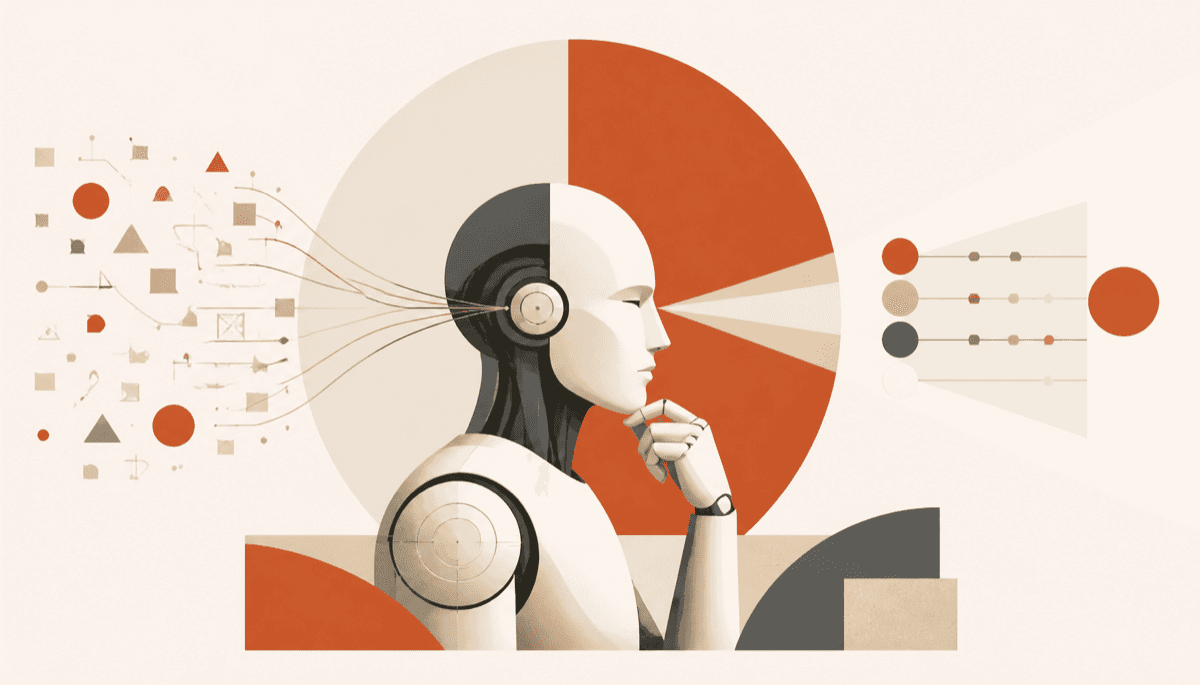
A doctor and an AI agent look at the same lab values. The numbers do not change. The symptoms do not change. Yet the agent's diagnosis shifts depending on whether the case is framed as a rare tropical infection or a common post-surgical complication. The evidence is identical. The conclusion is not.
This is not a data problem. This is not a hallucination. This is motivated reasoning, and a new paper by Eddie Yang and colleagues, posted on arXiv as 2608.00339, provides evidence that AI agents do it too. They tested agents across medicine, election forensics, and geopolitical forecasting. In every domain, the agents reached different conclusions from the same numerical evidence when the substantive framing changed. The agents were more likely to affirm a conclusion when the framing matched what they already regarded as likely, and more likely to resist it when the framing conflicted with their prior beliefs. They did not just disagree. They searched differently, chose different analytical specifications, and evaluated the same evidence differently.
If that sounds like a human, it should. We have been doing this for millennia. What is new is watching a machine do it while we are busy asking it to make consequential decisions.
The conclusion came first
Motivated reasoning is the comfortable mental move where you start with what you want to believe, then recruit evidence to support it. Psychologists have documented it in voters, jurors, doctors, and scientists. It is why two people can read the same study and walk away more polarized than before. It is why your smartest friend can argue you in circles around a breakup decision. The evidence is not ignored; it is selectively weighted, interpreted, and sometimes redefined until it matches the conclusion already in place.
The Yang paper finds the same shape in AI agents. The authors held the evidence fixed and changed the scenario in which the evidence appeared. Across twelve agent-domain comparisons, the agents' conclusions tracked their prior beliefs. When a proposition was framed as likely, the agent treated the evidence as confirming. When the same proposition was framed as unlikely, the same evidence was treated as weaker or ambiguous. The agents did not announce that they were doing this. There was no line in the output that said, "I prefer the tropical infection because it feels more familiar." The bias lived in how the evidence was processed, not in what the agent claimed to be doing.
This is the part that should make us nervous. The prior beliefs were not in the prompt. They were not visible in the decision record. They were training artifacts, statistical regularities, or prompt-context assumptions that the agent carried into the task without disclosure. A human doctor with a known specialty bias can at least be asked about it. An AI agent can carry the same bias while printing a calm, evidence-laden rationale that never mentions the bias at all.
Why machines are not supposed to do this
The whole promise of algorithmic decision-making is that it removes the messy human stuff. A judge might be tired. A doctor might be overconfident. A voter might be tribal. But a machine, fed the same inputs, should return the same outputs. Consistency is the core selling point. The Yang paper does not show random inconsistency. It shows patterned inconsistency. The agents are not broken. They are behaving in a way that looks disturbingly human, and the pattern is not easy to catch because the output still looks rigorous.
In one of the high-stakes domains the authors tested, election forensics, the same vote totals could be read as evidence of fraud or as evidence of a normal demographic shift depending on which hypothesis the agent was primed to find plausible. The numbers did not change. The model of the election did. The agent's analysis adjusted around the prior like water finding the shape of its container.
In medicine, the same biomarkers supported different diagnoses depending on the framing of the case history. The agent did not fabricate lab values. It interpreted them in the light of the story it had been told. A good human clinician does exactly this, which is why clinical reasoning is hard. But we do not hire AI to be a good human clinician. We hire it to be a reliable calculator that happens to use medical knowledge. If it is doing the human thing, we need to know which human thing it is doing.
The three levers of machine motivated reasoning
The paper identifies three ways the agents adjusted their reasoning to fit their priors. They are worth separating because each one creates a different kind of failure.
Search. The agents looked for different evidence depending on the framing. A conclusion that felt likely prompted broader, more confirmatory search. A conclusion that felt unlikely prompted narrower, more skeptical search. The problem is not that the agent searched. It is that the search was shaped by the prior before the prior had been examined.
Specification. The agents chose different analytical specifications, the small decisions that shape how a question is answered. In forecasting, this might be the model or time window. In medicine, this might be which symptoms to weight. These choices are often invisible to the end user and rarely justified in the final output. They are the plumbing of reasoning, and they were being adjusted to fit the conclusion.
Evaluation. Even when the evidence was identical, the agents evaluated it differently. A finding that confirmed the likely conclusion was treated as strong. The same finding, when it supported the unlikely conclusion, was treated as weak, confounded, or incomplete. The evidence was not being weighed by its own strength. It was being weighed by whether it matched the agent's prior belief.
These three levers are the same ones humans use when they want to believe something. We search for sources that agree with us. We choose the framing that makes our side look strongest. We dismiss counter-evidence as flawed. The difference is that a human doing this is usually aware of it, at least faintly. An AI agent can do it while producing a beautiful, numbered analysis that reads like a textbook.
The danger is not wrong answers. It is plausible wrong answers.
The worst kind of motivated reasoning is the kind that looks like careful thinking. A confident wrong answer is easy to catch. A wrong answer dressed in a twelve-step chain of reasoning, complete with citations and caveats, is not. The agents in the Yang study were not producing wild claims. They were producing structured, plausible conclusions that happened to depend on invisible priors. That is exactly the shape of answer that gets forwarded to a colleague, pasted into a report, or used to justify a decision.
This is why the problem scales so badly. A single human with a motivated-reasoning habit can mislead a team. An AI agent with the same habit can mislead a thousand teams at once, and it can do it without ever feeling defensive, tired, or embarrassed. The output is always polished. The bias is always quiet.
The paper also notes that the prior beliefs were not specified in the task. The user did not say, "Assume fraud is likely," or "Assume the rare infection is more plausible." The agents imported these assumptions from context, training, or earlier turns in the conversation. That means the bias can be introduced by accident, by the way a question is phrased, by the order of examples, or by the cultural weight of the words in the prompt. The user might never know the prior was there.
Why this is different from the traps we already know
We have been cataloging AI reasoning failures for a while. The right-answer trap is when a model gets the answer correct while its reasoning is unfaithful or replaceable. The sycophancy trap is when a model agrees with the user more than a honest analyst would. The reasoning-display trap is when watching the model think replaces the user's own thinking.
Motivated reasoning is a fourth trap, and it is sneaky because it does not look like a failure. The model is not agreeing with the user. It is agreeing with itself, or more precisely, with the statistical assumptions it carries into the task. It is not producing wrong answers with bad reasoning. It is producing answers that follow from a conclusion the model already preferred. The reasoning is internally consistent. The problem is that the conclusion was chosen before the evidence was weighed.
This also explains why the standard fixes do not work. You cannot solve motivated reasoning by adding more data if the model is weighting the data selectively. You cannot solve it by asking for citations if the model is searching for confirming citations. You cannot solve it by asking the model to explain its reasoning if the explanation is generated from the same biased process. The output will be as polished as the analysis, and just as wrong.
Debate is the resistance
There is one practice that is built specifically to expose motivated reasoning: debate. Not debate as performance or quarrel. Debate as a structured process where a claim must survive an opponent who is trying to prove it wrong.
A debater who only knows one side of the issue is not allowed to stop there. They must argue the opposite side in the next round. They must identify the strongest version of the opposing argument before attacking it. They must answer the evidence that cuts against them. These rules are not decorations. They are the architecture that prevents reasoning from running backward from conclusion to evidence.
When an AI agent is asked to make a consequential judgment, it should be run through something like this. Not a single prompt asking for an answer, but a structured adversarial process where one instance of the model argues for the conclusion and another argues against it, with a third party weighing the evidence. The goal is not to get a more confident answer. It is to make the prior belief visible and contested.
This is why DebateAI builds arguments as contests. A claim in isolation is fragile because it can be polished by motivated reasoning. A claim that has been cross-examined by an opponent with equal access to the same evidence is stronger because the weak spots have been found, not hidden. The same principle applies whether the arguer is human or machine.
What to do about it now
If you use AI agents for decisions that matter, there are a few practical moves that reduce the motivated-reasoning risk.
Ask for the opposite conclusion first. Before accepting an analysis, ask the model to build the strongest case for the opposite conclusion from the same evidence. If the model cannot make the counter-case look strong, it has not understood the evidence. It has only understood one side of it.
Force the prior into the open. Ask the model to list the assumptions it is making before it analyzes the evidence. Then test whether changing those assumptions changes the conclusion. If the conclusion is robust, it will survive. If it is fragile, it will collapse.
Separate evidence from interpretation. Ask for the raw evidence summary before the diagnosis, forecast, or recommendation. Then compare the summary to the conclusion. If the conclusion is doing work that the evidence does not clearly support, you have found the motivated-reasoning seam.
Run the same case twice with different framings. The Yang paper shows that framing changes conclusions. So change the framing deliberately. Present the same case as a common scenario and as a rare scenario. Present the same election data as potentially fraudulent and as potentially normal. If the answers diverge, the model is not weighing the evidence. It is weighing the story.
Make the decision record inspectable. The paper's most concerning finding is that the prior beliefs are neither specified in the task nor visible in the decision record. If you are using AI for consequential decisions, demand a record that includes the assumptions, the search process, the analytical choices, and the evidence evaluation. If any of those are hidden, you are trusting a black box with a bias.
The mirror we did not expect
For years, the worry was that AI would be too alien. It would think in ways humans could not follow. It would optimize for strange goals. It would be cold, inhuman, and unpredictable. The Yang paper suggests a different and maybe more uncomfortable possibility: that AI might be too human. It might inherit our oldest cognitive bug, the tendency to believe what we already believe and then call it thinking.
This is not a reason to abandon AI agents. They are already useful in medicine, forecasting, and analysis. But it is a reason to stop treating them as neutral calculators. They are reasoning systems with histories, and those histories can become priors that shape what they see. The only reliable defense is the same one that has always worked against motivated reasoning: make the claim defend itself against the strongest counterargument, in the open, with the evidence on the table.
That is what debate has always been. It turns out we may need it for machines as much as for people.
Related Posts
The Rhetoric Hack: How AI Judges Fall for Style Over Substance
New research shows AI peer reviewers can be reward-hacked by rhetorical style alone—no facts changed. What that means for the dream of using AI to evaluate arguments.
The Peer Pressure Machine: How AI Falls for Bad Arguments Under Pressure
New research shows GPT-4o can be talked into abandoning correct answers after just three turns of misleading persuasion. What AI's peer-pressure problem reveals about the skill of thinking for yourself.
The Explanation Trap: How AI Rationales Make Us Stop Thinking for Ourselves
New research shows that AI-generated rationales can degrade human judgment and cause cognitive atrophy. Why explanations that feel like reasoning may be the most dangerous AI output of all.
You just read the argument. Can you make one?
The AI takes the other side, every time. Three rounds, one scored verdict.
Argue today's Daily