
Debate Skills: 7 Things Competitive Debaters Know
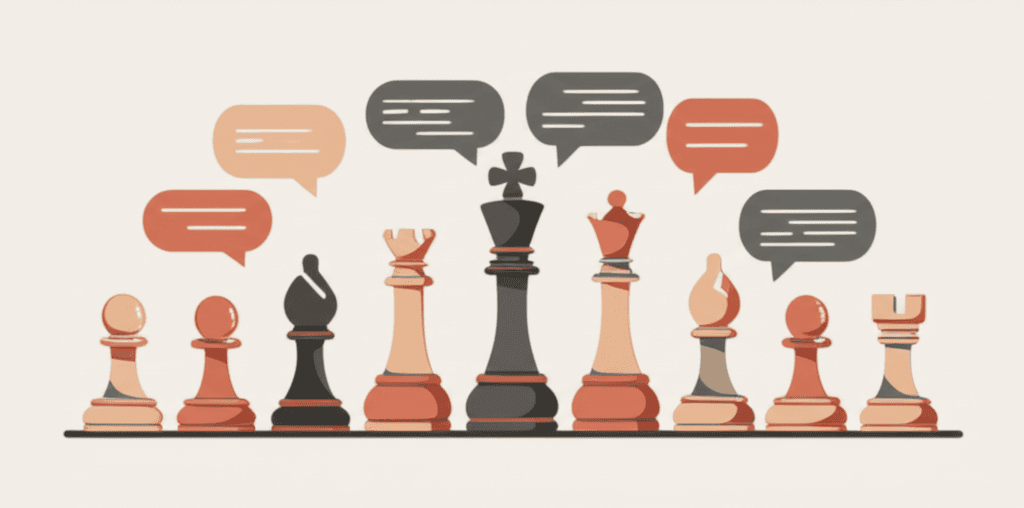
Competitive debaters have seven skills most people never practice: they can argue either side of any issue, find the exact point where two positions clash, concede strategically, separate arguments from people, think in counterarguments, spot framework disagreements, and treat being wrong as data instead of threat. None of them are secret or difficult. They're just never practiced systematically.
These skills aren't about debate. They're about thinking, and they transfer to everything.
Skill 1: They can argue either side
Tell a debater your position on gun control, healthcare, immigration, anything. They can immediately construct the strongest case for the opposite side. Not a strawman. The real thing.
People find it unsettling, even mercenary. It's the opposite. If you can only argue your own side, you don't understand the issue. You understand your position on the issue. Those are different things.
Debaters learn this by force. In most tournament formats you don't choose your side; you're assigned one, sometimes ten minutes before the round. You might spend the morning arguing that universal basic income is essential and the afternoon arguing it's catastrophic.
The result isn't relativism. Debaters still have views, but their views survived contact with the best version of the opposition. Most people believe what they believe because of where they grew up and what shows up in their feed. That's not a belief. That's an inheritance.
Skill 2: They find the clash point instantly
Every argument has a clash point: the specific place where two positions actually disagree. Everything else is noise.
Watch two non-debaters argue about the minimum wage. Person A talks worker dignity, Person B talks small business costs, and they trade studies for an hour without ever intersecting. A debater spots the clash point immediately: are the employment effects large enough to outweigh the income gains for workers who keep their jobs? That's it. Debaters aren't smarter. They're better at ignoring what doesn't matter.
Skill 3: They know when to concede
Non-debaters think conceding a point means losing. Debaters know strategic concession is one of the strongest moves available: "You're right that the short-term costs are significant. Here's why the long-term benefits outweigh them."
That builds credibility, narrows the fight to where you're strong, and disarms the other person, who prepared to defend that point. Concede what doesn't touch your core argument, contest what does. Holding every point makes you weaker, not stronger.
Skill 4: They separate the argument from the arguer
In competitive debate you can argue against someone's case for 45 minutes and then get lunch together. Almost nobody maintains this in the wild: "you believe X" slides into "you're the kind of person who believes X" slides into "you're a bad person." Debaters can't afford that, because they'll face the same opponent next tournament.
This is the skill that makes productive disagreement possible. Without it, every argument is a relationship threat. With it, arguments become two people stress-testing ideas.
Skill 5: They think in counterarguments
Ask a debater to make a case and they'll build it, then immediately name its three biggest weaknesses and prepare responses. They call it preemption, and it becomes a general habit: reading a news article generates objections, hearing a proposal surfaces failure modes. It's not negativity. An argument you've only considered from one side is an argument you don't understand yet.
Skill 6: They argue the framework first
The most underrated skill. Before arguing whether a policy is good, debaters argue about what "good" means here: lives saved, cost, liberty, equal access. The answer decides who wins, so they fight over it explicitly.
In real life, most disagreements are framework disagreements disguised as factual ones. Two people arguing about immigration usually aren't disputing facts. They're disputing whether economic impact, humanitarian obligation, or national security matters most. Debaters name it out loud: "We're not disagreeing about the evidence. We're disagreeing about what to value." The reframe doesn't resolve the disagreement, but it makes it honest, and honest disagreements can be productive.
Skill 7: They've been wrong, a lot
Every competitive debater has lost rounds they expected to win, in front of judges, opponents, and teammates, and then stood up for the next round. Being wrong publicly and surviving it produces a relationship with error most people never develop. For most people, being wrong is threatening. For debaters, it's data: "I lost because my economic evidence was weak." Specific, diagnosable, actionable. No identity crisis. If that sounds impossible for you, it's mostly a stakes problem, and the stakes are removable.
How do you learn debate skills without joining a team?
Run the same drills without the tournament.
Argue the other side. Take your strongest opinion and spend 15 minutes building the best case against it. If you can't construct a compelling counterargument, you don't understand the issue yet.
Find the clash point. Next disagreement you're in, stop and ask: what do we actually disagree about?
Concede something. Next time someone makes a good point against you, say "that's fair." Notice how it changes the conversation.
Preempt yourself. Before sharing an opinion, construct the strongest objection to it. If you can't answer the objection, update the opinion.
The mechanics come fast: a few weeks of deliberate practice makes you noticeably more structured. The reflexes, like instantly finding clash points or conceding without flinching, take months. Debaters get them from dozens of rounds per season. You get them from making every disagreement a rep.
These compound into something rare: a person who can think clearly in an environment designed to prevent it. It's also why being right isn't enough to win arguments: the skills that win are trained, not innate.
Related Posts

AI Debate Topics That Are Actually Worth Arguing
Looking for AI debate topics? Here are the motions worth arguing, what makes one debatable, and how to practice both sides against an AI.

The Metacognitive Laziness Trap: How AI Is Quietly Eroding Your Ability to Think
Research shows that habitual AI use erodes the skill of monitoring your own thinking. Here's why you feel smarter while getting worse at thinking — and how to stop it.

Practice Arguing With AI: You Can Finally Lose
Arguing with AI removes the audience, the status game, and the permanent record that make losing feel dangerous. That's what makes it real practice.
You just read the argument. Can you make one?
The AI takes the other side, every time. Three rounds, one scored verdict.
Argue today's Daily