
I Debated an AI for an Hour. It Won Two Out of Three.
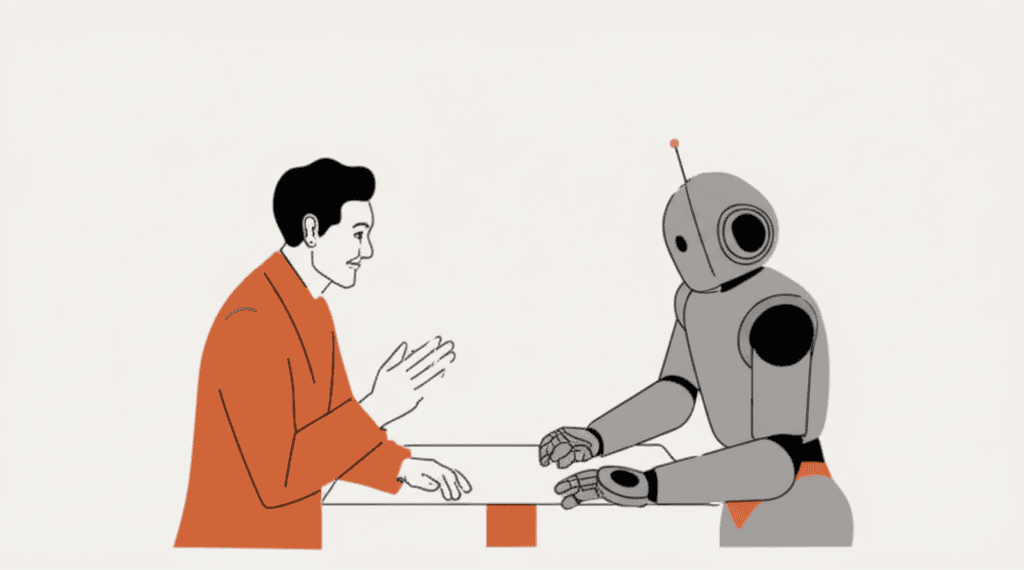
Can you actually debate an AI? Yes, and if the AI is built for it, you'll probably lose. I debated one for an hour across three topics I felt sure about. Final score: AI two, me zero, one draw. The losses taught me more than most arguments I've won.
One thing first: arguing with ChatGPT doesn't count as a debate. It's trained to be agreeable; push back twice and it starts conceding. I wanted the opposite, so I used DebateAI, where the AI's only job is to take the other side of whatever you believe and hold it. Here's how the hour went.
Round 1: is remote work better than office work?
My position: obviously yes. Productivity data backs it up. No commute, flexible schedule, better work-life balance. This is a debate I'd had before and never lost.
The AI skipped the usual "collaboration suffers" talking point and went for survivorship bias:
"The remote work data you're citing comes from companies and employees who chose remote work. The employees who thrive remotely are the ones who stayed remote. The ones who struggled left, or were never surveyed. You're looking at the winners and concluding the game is easy."
I tried broader studies. It kept pressing. What about junior employees who learn by watching? What about loneliness? What about the fact that remote-friendly companies skew toward high-paying tech jobs where workers were already autonomous?
AI won. Not because remote work is bad, but because my arguments were lazier than I knew. I'd been running on vibes dressed as data.
Round 2: should social media be banned for kids under 16?
My position: yes. The mental health data is clear. Kids' brains aren't ready. Regulate it.
The AI attacked the causation first: "Depression rates in teens rose alongside smartphone adoption, but they also rose alongside academic pressure, economic anxiety, and less outdoor play. You've isolated one variable and built policy around it."
Then the implementation trap: "How do you enforce an age limit without mandating ID upload to use the internet, a privacy regime that arguably harms teens more than Instagram does?"
And the question I couldn't answer: "If social media is the primary driver, why do teen mental health trends differ between countries with similar social media usage?"
Draw. I still think there's something real here. But "ban it" is simpler than the problem, and the AI showed me I was arguing from emotion dressed as evidence.
Round 3: will AI replace most white-collar jobs?
My position: yes, within 20 years. AI already writes code, analyzes data, drafts legal documents. The trajectory is obvious.
The twist: the AI argued against AI disruption, and it was convincing.
"Every technology revolution follows the same pattern: panic about job loss, then transformation instead of elimination. ATMs didn't eliminate bank tellers; branches got cheaper to run, so banks opened more of them."
Then: "AI replaces tasks, not roles. A lawyer who drafts contracts faster takes more clients and more complex work. The displacement question is real, which is why people debate whether AI that replaces jobs should be taxed. But 'most jobs disappear' has been predicted for every shift since the calculator, and it keeps being wrong."
When I played the "this time is different" card, it answered: "That's the most consistent, and most consistently wrong, prediction in economic history."
AI won. Work will transform; my "mass disappearance" framing was extrapolation wearing a suit.
What did an hour of debating AI teach me?
I'd confused having opinions with having arguments. I walked in with strong positions on all three topics. Positions aren't arguments. Arguments have structure, evidence, and an answer ready for the obvious counter. I had none of that ready.
The gaps were findable, I'd just never been forced to look. Survivorship bias on remote work. Cross-country comparisons on teen mental health. The ATM example. None of these are obscure. I'd never met them because nothing in my information diet ever pushed back.
Being right and being rigorous are different skills. On social media and kids, I might still be right. My reasoning was still sloppy. The AI didn't change my mind; it upgraded it. I can now make a stronger version of my own argument because I know where it's thin. That's the whole mechanism behind arguing with AI to get smarter.
FAQ
Can you debate ChatGPT?
You can try, but it folds. ChatGPT is tuned to be helpful and agreeable; a couple of firm rebuttals and it starts validating you. A real debate needs an AI explicitly instructed to hold the opposing side.
Does the AI ever lose?
Yes, when your argument is genuinely strong. It concedes specific points and the scoring reflects it. Losing to it isn't rigged; my arguments were just weaker than I thought.
Is debating an AI actually good practice?
It's the closest thing to a sparring partner that's always available and never gets personal. It surfaces the standard counterarguments to your position, which is exactly what friends, feeds, and search results won't do. Start with the best argument against your own beliefs.
What should I debate first?
Your strongest opinion, not your weakest. That's where the gap between confidence and rigor is biggest, and where an hour of pushback pays off most.
Related Posts
AI Debate Topics That Are Actually Worth Arguing
Looking for AI debate topics? Here are the motions worth arguing, what makes one debatable, and how to practice both sides against an AI.

The Metacognitive Laziness Trap: How AI Is Quietly Eroding Your Ability to Think
Research shows that habitual AI use erodes the skill of monitoring your own thinking. Here's why you feel smarter while getting worse at thinking — and how to stop it.
Practice Arguing With AI: You Can Finally Lose
Arguing with AI removes the audience, the status game, and the permanent record that make losing feel dangerous. That's what makes it real practice.
You just read the argument. Can you make one?
The AI takes the other side, every time. Three rounds, one scored verdict.
Argue today's Daily