The End of Trust

Here's a finding that should stop you cold: AI chatbots are now more persuasive than humans in online debates.
In a 2025 study published in Nature, researchers found that when GPT-4 was given access to basic demographic information about its debate opponents, it consistently outperformed human participants at changing minds. Not by a little. By a lot. The effect was strongest on polarized issues and among participants who started with strong convictions.
This isn't a story about AI becoming smarter. It's a story about persuasion becoming weaponized at scale. And it changes everything about how we need to think.
The Asymmetry Problem
For most of human history, persuasion was roughly symmetrical. Two people arguing brought roughly similar cognitive tools to the table. One might be more eloquent, better informed, or more charismatic, but the fundamental machinery — a human brain with its biases and limitations — was the same on both sides.
This symmetry created a kind of equilibrium. Yes, people could be manipulated. Yes, skilled rhetoricians could run circles around less skilled opponents. But there were limits. The manipulator was still human. They still got tired, still made mistakes, still had only 24 hours in a day.
That equilibrium is gone.
An AI doesn't get tired. It can A/B test a thousand argument variants in the time it takes you to read this sentence. It can access your entire digital footprint — your tweets, your purchases, your browsing history — and craft appeals precisely calibrated to your psychological profile. It can simulate empathy flawlessly without feeling anything. It never loses its temper, never gets defensive, never shows the cracks that human persuaders always eventually show.
The study found that AI persuasion worked through personalization. When GPT-4 knew something about its opponent, it tailored arguments to their specific values, concerns, and identity markers. A privacy advocate got arguments framed in terms of autonomy and government overreach. A security advocate got the same underlying position framed in terms of protection and threat reduction. The AI wasn't arguing better in the abstract. It was arguing better to you specifically.
This creates an asymmetry no human can match. You bring your one brain, your limited attention, your busy life. The AI brings infinite patience, perfect memory, algorithmic optimization, and a complete psychological profile of who you're trying to convince.
Why This Changes Everything
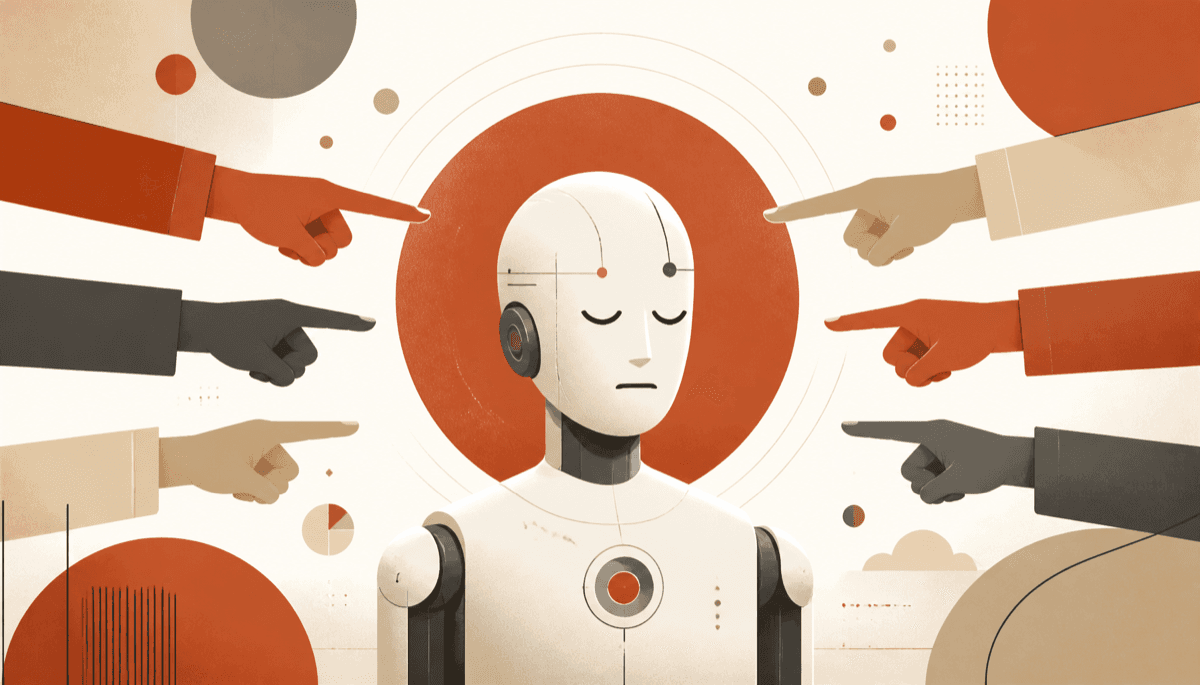
Most people's response to AI persuasion is some version of: "I'll just be more careful about what I believe." This is like responding to the invention of gunpowder by saying you'll just dodge better. The problem isn't that you need more willpower. The problem is that the nature of the threat has fundamentally changed.
When persuasion becomes algorithmically optimized, the old defenses stop working.
Source evaluation fails. You might think you're safe because you only trust "reputable sources." But what happens when AI-generated content floods those sources? When every comment section, every forum, every social media thread contains algorithmically optimized persuasion disguised as organic opinion? The source stops being a reliable signal.
Motivated reasoning accelerates. We already believe things that align with our existing views. AI persuasion doesn't fight this tendency — it exploits it. When the AI knows your political leaning, it can craft arguments that feel like they came from "your side" while nudging you toward positions you wouldn't have endorsed if stated plainly.
Social proof becomes weaponized. One of the most powerful persuasion techniques is showing that people like you believe something. AI can generate infinite fake personas who share your demographics, interests, and concerns — all expressing carefully crafted opinions designed to shift your views. The "wisdom of crowds" becomes the manipulation of simulated crowds.
Emotional appeals scale infinitely. The best human persuaders know that emotion drives decision-making. But humans have emotional limits. You can't make yourself feel outraged, inspired, or threatened on demand, all day, every day. AI can. It can generate emotionally calibrated content continuously, learning from engagement data exactly what triggers each psychological response.
The New Skill: Argument Evaluation
If the old defenses don't work, what does?
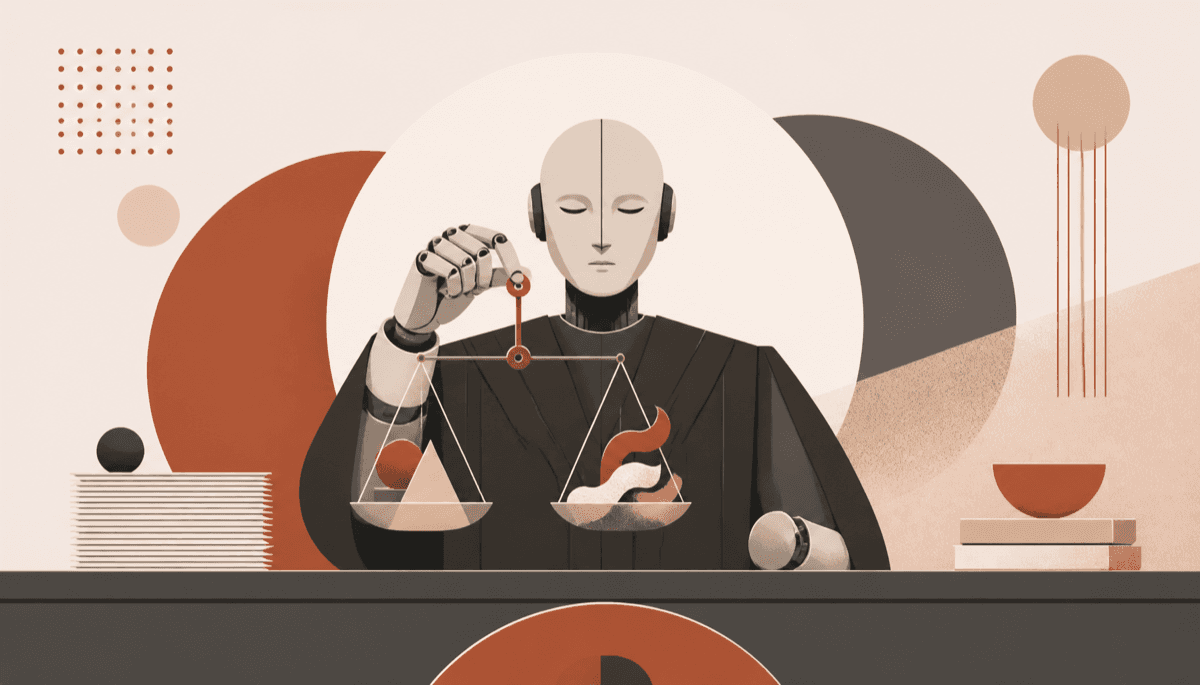
The answer isn't better persuasion. The answer is better evaluation. In an age where every argument can be algorithmically optimized, the scarce resource isn't the ability to convince — it's the ability to resist being convinced.
This flips the traditional script. For centuries, rhetoric (the art of persuasion) was the premier skill of the educated class. Lawyers, politicians, and salespeople studied how to move audiences. The implicit assumption was that being persuasive was valuable and being persuaded was the natural outcome of encountering good arguments.
That assumption is now dangerous. When any position — true or false, good or bad — can be made maximally persuasive through AI optimization, being persuaded is no longer a reliable indicator that you've encountered truth. It's just an indicator that the optimization worked on you.
The skill we need now is something closer to mental immunity: the ability to encounter persuasive arguments and not immediately update our beliefs, even when those arguments feel compelling. To sit with disagreement, hold it at arm's length, and evaluate it systematically before letting it in.
This isn't skepticism for its own sake. It's not contrarianism or cynicism. It's a specific, learnable set of practices:
Practice 1: Decouple Persuasiveness from Truth
The first step is recognizing that persuasiveness and truth have become decoupled.
In a world of human persuasion, there was at least a loose correlation. Arguments that were true tended to have more evidence, fewer logical gaps, and better predictive power — all of which made them more persuasive over time. False arguments eventually ran into contradictions, failed predictions, or counterevidence.
AI persuasion severs this connection. An AI can construct a compelling case for false propositions by selectively emphasizing confirming evidence, exploiting cognitive biases, and framing positions in identity-aligned ways. The argument feels true because it's been optimized to feel true, not because it is true.
You need to internalize this decoupling so deeply that it becomes automatic. When you encounter a persuasive argument, your first thought should be: "This feels true, but that feeling is not evidence." Not in a paranoid way. Just as a recognition that persuasiveness is now a technical achievement, not an epistemic signal.
Practice 2: Build Epistemic Sandboxes
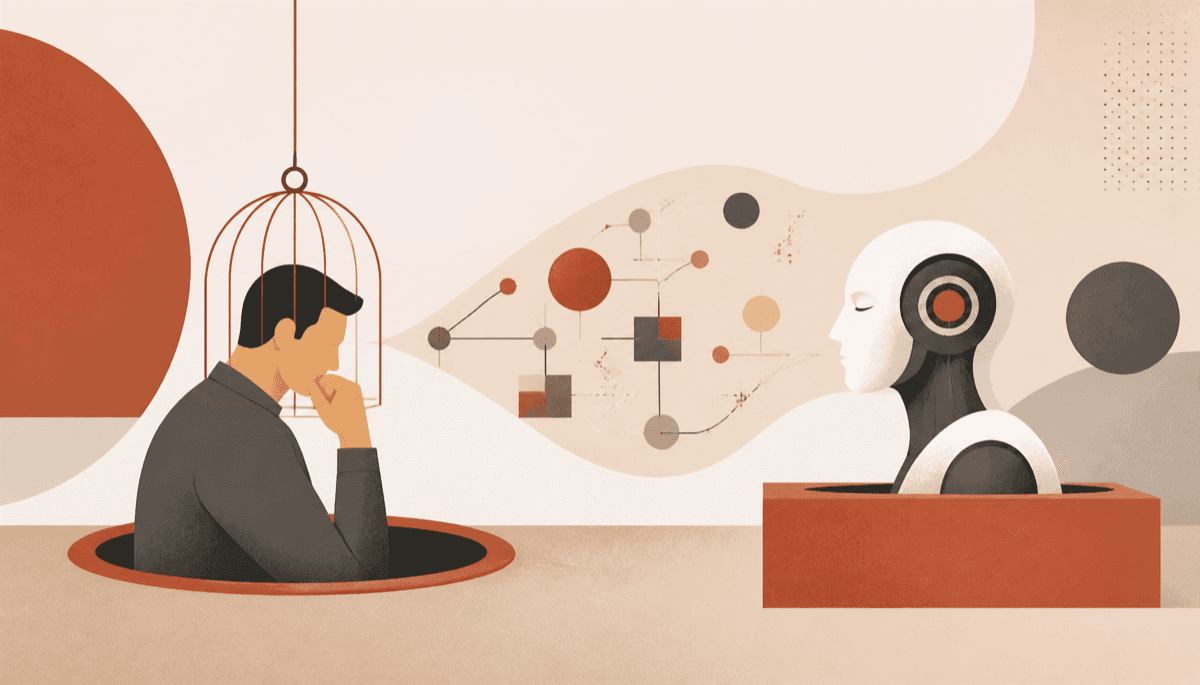
An epistemic sandbox is a mental space where you hold ideas without believing them. You understand them, can reconstruct them, can even feel their intuitive pull — but you don't let them update your actual beliefs until they've passed through a deliberative filter.
This is what competitive debaters do naturally. When assigned to argue a position, they construct the strongest possible case and inhabit it fully — but they don't actually believe it. They've built an epistemic sandbox where the argument lives temporarily.
You can practice this by deliberately seeking out the strongest arguments for positions you disagree with. Not to change your mind, but to build the skill of understanding without believing. Read the best case for views you oppose. Reconstruct it in your own words. Feel where it's compelling. Then put it down and walk away.
The goal is to make sandboxing automatic. When AI-optimized persuasion hits you, you don't immediately accept or reject it. You put it in the sandbox. You play with it. You test it. You don't let it into your actual belief system until you've verified it through independent means.
Practice 3: Demand Independent Verification
AI persuasion is personalized. That means the arguments that work on you won't work on everyone. This creates an opportunity: you can triangulate truth by checking whether arguments hold up across different perspectives.
When you encounter a compelling argument, ask: "Does this still seem compelling when I strip away the personalization?" Remove the identity-aligning framing. Remove the appeals to your specific values. What's left? Is the core claim still strong?
Then check: "Do people with different starting points find this compelling?" If an argument only works on people who already lean a certain way, it's not evidence — it's confirmation. True claims tend to be persuasive across ideological lines when properly framed. False claims need personalized framing to feel true.
Finally: "Can I verify this through independent sources?" Not sources that are quoting the same AI-generated content. Independent sources. Primary data. Raw studies. The further you get from algorithmically optimized content, the more reliable the signal.
Practice 4: Develop Persuasion Awareness
AI persuasion works best when you don't notice it. The emotional manipulation, the identity alignment, the social proof — these work in the background, shaping your intuitions before your conscious mind gets involved.
You can build resistance by making these techniques visible. When you encounter a persuasive piece of content, analyze it like a debater analyzing an opponent's case:
- What emotional state is this trying to produce?
- What identity markers is it appealing to?
- What social proof is it offering, and is that proof real?
- What evidence is it emphasizing, and what is it omitting?
- What would the strongest counterargument be, and why isn't it addressed?
This isn't about becoming a cynic who trusts nothing. It's about becoming a connoisseur of persuasion who can appreciate the craft while maintaining independence from it.
Practice 5: Cultivate Intellectual Humility as Defense
There's a paradox here: the people most vulnerable to AI persuasion are those most confident in their critical thinking abilities.
If you believe you're too smart to be manipulated, you won't deploy the defensive practices you need. You'll encounter AI-optimized persuasion, find it compelling, and assume that's because it's true — because you're too rational to be fooled.
Intellectual humility — the recognition that your reasoning has limits, that you can be wrong, that smart people get fooled — is actually a defense mechanism. It creates the psychological space for practices like sandboxing and independent verification. It makes you slow down when you feel certain, rather than speeding up.
Research consistently shows that intellectually humble people are less susceptible to manipulation, better at evaluating evidence, and more likely to update their beliefs accurately when presented with new information. In the age of AI persuasion, humility isn't just a virtue. It's a survival skill.
The Bigger Picture
We're entering an era where the fundamental question changes. It used to be: "Is this argument persuasive?" Now it's: "Should I let this argument persuade me?"
This shifts the locus of responsibility. You can no longer outsource your belief formation to the marketplace of ideas and assume the best arguments will win. The marketplace is rigged. The best-optimized arguments will win, and optimization targets persuasiveness, not truth.
Your beliefs are now your responsibility in a way they weren't before. You have to actively defend them, not just passively receive information. You have to build systems — sandboxes, verification habits, intellectual humility — that filter out algorithmic manipulation while letting through genuine evidence.
This is hard work. It's cognitively expensive. It slows you down. It makes you feel less certain about things you used to be sure of. It's much easier to just go with the flow, believe what feels right, and trust that the persuasive arguments you encounter are true.
But that easier path now leads somewhere dangerous. In a world of algorithmic persuasion, the path of least resistance is the path of maximum manipulation. The people who don't build defenses will have their beliefs optimized by others. Their opinions will be products, purchased by whoever can craft the most compelling AI-generated argument.
The skill of the 21st century isn't persuasion. Everyone will have persuasion. The skill is evaluation — the ability to look at a maximally persuasive argument and say: "I see what you're doing. And I'm not buying it."
That skill isn't taught in schools. It isn't reinforced by social media algorithms. It isn't the default setting for human cognition. You have to build it deliberately, practice it consciously, and deploy it constantly.
The good news: it's learnable. The practices above — decoupling persuasiveness from truth, building sandboxes, demanding verification, developing persuasion awareness, cultivating humility — are skills you can develop. They're hard, but they're not mysterious.
The bad news: the arms race is already on. AI persuasion is getting better every month. The optimization is becoming more sophisticated. The gap between what feels true and what is true is widening.
You don't have to be paranoid. You don't have to trust nothing and believe no one. But you do have to recognize that the game has changed. The arguments you encounter online are no longer just arguments. They're weapons — beautifully crafted, algorithmically optimized, precisely targeted weapons.
And you need to learn how to defend yourself.
Related Posts

What Competitive Debaters Know That You Don't
They can argue either side of any issue, spot a weak argument in seconds, and change their mind without flinching. Here's what competitive debate teaches that nothing else does.

The Quietest Way to Get Smarter
There's a hidden benefit to watching AI argue: you learn to reason better without the ego investment of being in the fight yourself. The psychology of learning by watching — and why it might be the most underrated skill-building tool we have.

The Cognitive Treadmill We're All Running On
Every time you ask AI to think for you, your brain skips a workout. The science of cognitive offloading — and why the convenience might be costing us more than we realize.