
Cognitive Offloading: Is AI Making You Worse at Thinking?
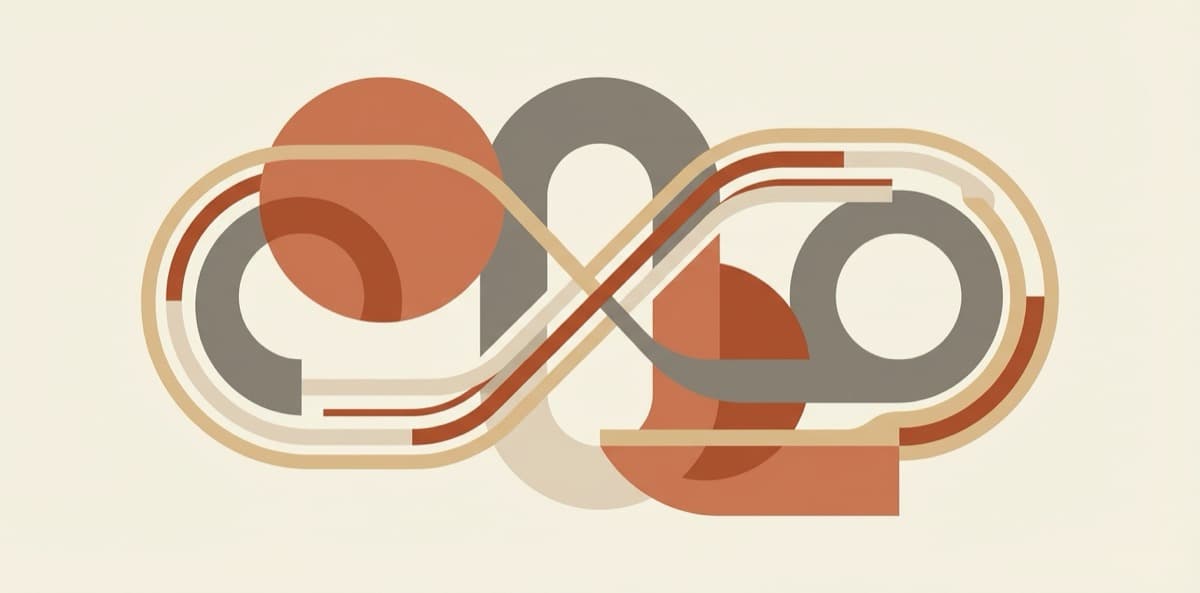
Cognitive offloading is what happens when you delegate mental work to an external tool. GPS offloads spatial reasoning. Calculators offload arithmetic. AI chatbots offload something bigger: the process of reasoning through a problem. Each offload is individually harmless, but they compound, and research now suggests heavy AI use correlates with weaker critical thinking. The question isn't whether to use AI. It's how to use it without your reasoning going soft.
The metaphor I keep coming back to: AI is a forklift for your brain. You can still lift the weight. You just won't get stronger.
What is cognitive offloading?
Offloading is old. Writing offloaded memory. Nobody mourns doing long division by hand.
But AI is a different category of offload. A calculator handles the computation while you keep the concepts: you still know what addition means, you still see the numbers. The offloading is partial.
With AI, the offloading can be total. You describe a problem. AI returns an answer complete with reasoning. You read it, it sounds plausible, you move on. At no point did your brain work through the logic. You consumed the conclusion without participating in the reasoning that produced it.
Does AI use actually weaken critical thinking?
Early evidence says the correlation is real. A 2025 study by Michael Gerlich, published in the journal Societies, found that heavier AI tool use was associated with weaker critical thinking performance, with cognitive offloading as the mediating mechanism. Younger participants showed the strongest effect.
One study of self-reported habits isn't proof of causation, and the honest read is "early signal, not settled science." But the mechanism it points to isn't mysterious. Critical thinking is made of trainable components: evaluating evidence, holding possibilities in working memory, spotting inconsistencies, constructing counterarguments. Skills develop through use. Skip the reps and they fade.
DeepMind CEO Demis Hassabis has made the same point: AI can sharpen your thinking or dull it, and the difference is entirely in how you use it.
Why this matters more than it seems
The risk isn't helplessness without AI. The deeper risk is losing the ability to verify.
Do total offloading enough times and you can no longer tell whether the reasoning you're reading is sound. Obvious errors, you'll catch. Subtle ones, unstated assumptions, logical gaps? Those slip through, because your verification muscles are the same muscles as your reasoning muscles.
That matters for consequential decisions: medical information, financial choices, political judgment. The most dangerous AI failure isn't a wrong answer that looks wrong. It's flawed reasoning that looks correct, because you'll trust it, act on it, and never know.
There's also a distribution problem. People with strong reasoning skills offload less, so they keep practicing and stay sharp. People with weaker skills offload more and atrophy faster. AI becomes a magnifier of existing cognitive inequality. Whether that trade is worth it is worth arguing about, along with whether AI is an existential threat or just a tool we're using badly.
How to use AI without losing the skill
The pattern that protects you is simple: stay in the reasoning loop. Concretely:
Use AI for information, not conclusions. Ask for facts, sources, and perspectives you haven't considered. Do the synthesis yourself. "What evidence am I missing?" beats "what should I conclude?"
Argue with the output. When AI gives you an answer, find the weak points before accepting it. If you can't construct a counterargument, you haven't understood the position. You've memorized it. This is the core of the two ways to use AI: tool that extends you versus replacement that erodes you.
Keep the hardest problems for yourself. Offload the routine. The problems that stretch you are the ones that strengthen you.
Debate, don't just query. Structured disagreement is the highest-rep workout for reasoning: you articulate a position, defend it in real time, and adjust under pressure. It's why arguing with AI can make you smarter while asking AI for answers can make you softer. Take a live question like should students be allowed to use AI for homework and defend a side.
Audit your offloads. For a week, notice each time you reach for AI and ask: could I have done this myself? Was I buying efficiency or avoiding effort? Attention alone changes the pattern.
The uncomfortable question
Maybe these skills are becoming obsolete. Maybe the future belongs to people who operate the forklift, not people who insist on lifting.
But consider what that world optimizes for: humans managing AI outputs without participating in the reasoning that produced them. Independent reasoning isn't just a professional skill. It's how you evaluate medical advice, financial claims, and political arguments. Trading it away looks rational in the moment and expensive in retrospect.
The gym is still open. The weights are still there. The forklift is just parked outside, engine running, and every day it gets easier to convince yourself that lifting is a waste of energy.
FAQ
What is cognitive offloading?
Delegating mental tasks to external tools: GPS for navigation, calculators for arithmetic, AI for reasoning. The tool does the work, so your brain skips the practice.
Is AI actually making people dumber?
The research so far shows correlation, not proven causation: heavier AI use is associated with weaker critical thinking, mediated by offloading. Treat it as an early warning about usage patterns, not a verdict on the technology.
How do I use AI without weakening my thinking?
Keep yourself in the loop. Use AI to gather evidence and counterpoints, then synthesize and conclude yourself. Argue against its outputs before accepting them. And keep a regular practice of active reasoning, like debate, where you defend positions under pushback instead of consuming answers.
Related Posts
The Rhetoric Hack: How AI Judges Fall for Style Over Substance
New research shows AI peer reviewers can be reward-hacked by rhetorical style alone—no facts changed. What that means for the dream of using AI to evaluate arguments.
The Peer Pressure Machine: How AI Falls for Bad Arguments Under Pressure
New research shows GPT-4o can be talked into abandoning correct answers after just three turns of misleading persuasion. What AI's peer-pressure problem reveals about the skill of thinking for yourself.
The Explanation Trap: How AI Rationales Make Us Stop Thinking for Ourselves
New research shows that AI-generated rationales can degrade human judgment and cause cognitive atrophy. Why explanations that feel like reasoning may be the most dangerous AI output of all.
You just read the argument. Can you make one?
The AI takes the other side, every time. Three rounds, one scored verdict.
Argue today's Daily