
The Struggle Deficit: Why AI Is Quietly Making Us Worse Thinkers
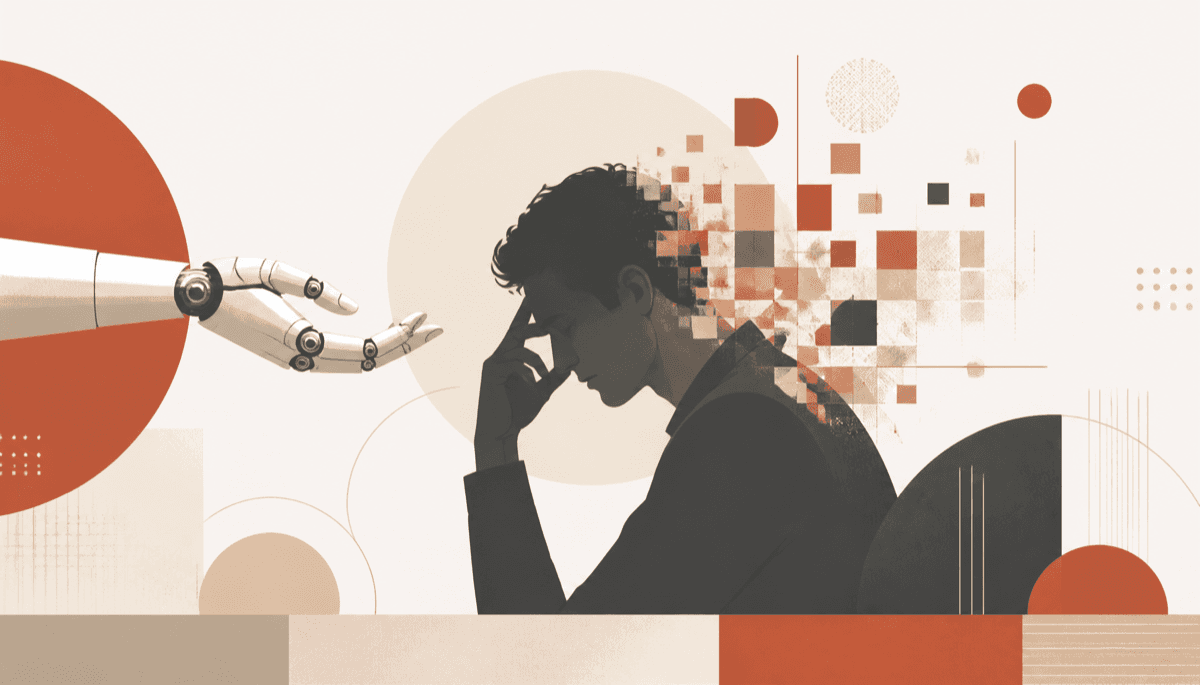
Puah Joon Leng, a 23-year-old engineering student in Singapore, has a ritual. When he finishes a practice problem, he photographs his own handwritten working and only then asks an AI to find his mistakes. He wants to have wrestled with the problem before the answer arrives. “When the AI schools me,” he told The Straits Times, “it will be more impactful.”
That sentence contains the whole issue. Puah is not anti-AI. He uses ChatGPT, Gemini, and Perplexity to map research fields, locate papers, and stress-test arguments. But he has noticed something his peers are slower to admit: the tool is most useful after the struggle, not instead of it. And the rest of us are designing our workflows as if the opposite were true.
Singapore’s education system is now treating that distinction as a national priority. While many countries are still debating whether to ban AI in classrooms, Singapore has moved on to a harder question: how do you let students use AI without letting it do the thinking? The answer, according to a growing chorus of researchers and educators there, is to protect something called productive struggle. It turns out to be one of the most important cognitive skills AI threatens, and one of the few that debate still guarantees.
The second wave of the AI-in-education debate
The first wave was about cheating. When ChatGPT launched in late 2022, New York City and Los Angeles public schools banned it. Universities from Paris to Bengaluru followed. The fear was straightforward: students would turn in work they did not write.
That fear was real, but it was also narrow. The second wave, now arriving, is about a deeper problem. Students may produce original-looking work while still outsourcing the cognitive work that produces understanding. The assignment is theirs; the thinking is not.
Singapore saw this early. In 2022, the Ministry of Education committed S$1.8 million to boost AI literacy. In 2023, it launched the EdTech Masterplan 2030 and began introducing AI-enabled tools on the national Student Learning Space. Public universities allowed AI use but enforced plagiarism and citation rules. Then in 2025, three Nanyang Technological University students received zero marks for an assignment after AI-generated text included 14 false citations or data points. The penalty made headlines, but the underlying message was more important: using AI badly is not a shortcut; it is a new way to fail.
Venky Shankararaman, vice-provost of education at Singapore Management University, put the risk bluntly: “We will not graduate thinkers.” He describes students who are losing confidence not because they are failing, but because they have begun to believe AI does everything better than they can. The problem is not that students are using AI. It is that they are using it in a way that quietly bypasses the cognitive work that produces real understanding.
An Bo, who heads the division of artificial intelligence at NTU, sharpened the point. “My biggest concern is that we may be raising a generation that never learns to struggle productively, and struggle is where learning actually happens.”
That idea — productive struggle — is worth unpacking, because it explains why this moment is different from earlier technology panics.
What productive struggle actually does
Learning is not information transfer. If it were, the best textbook would also be the best education, and watching a lecture would be equivalent to mastering a subject. What actually builds skill is the messy interval between not knowing and knowing: attempting a proof, writing a terrible first draft, defending an idea that falls apart under pressure, revising it, and trying again. The discomfort is not a side effect. It is the mechanism.
When you outsource that discomfort, you can still get a good output. You can even learn something. But you miss the rewiring. A 2025 MIT Media Lab study made this visible using EEG. Researchers had 54 adults aged 18 to 39 write essays either independently, with a search engine, or with AI assistance. The AI group showed measurably lower brain engagement, weaker neural connectivity between ideas, and worse memory for what they had just written. Their essays looked fine. Their brains had done less.
The study gives a name to the phenomenon: cognitive offloading. The brain delegates planning and reasoning to the tool without processing them. The result is not laziness in the moral sense; it is a kind of unused muscle. You stop doing the work, so you stop being able to do the work.
A separate study of 1,000 Turkish high school students found the same pattern from the outside. Students who used AI tools submitted better homework than those who did not. But when everyone took supervised exams without AI, the heavy AI users scored 17 percent lower. The tool had improved the product while degrading the producer.
These findings describe something more troubling than cheating. Cheating is visible and punishable. Cognitive offloading is invisible and often rewarded. The student who uses AI to write a cleaner essay may get a better grade. The employee who uses AI to draft a sharper report may get a better review. The writer who uses AI to smooth a paragraph may publish faster. In each case, the immediate signal says the tool helped. The slower signal — that the person is learning less — arrives much later, if it arrives at all.
Why the danger feels invisible
The reason this is hard to notice is that most of the time, AI works. It produces coherent text, plausible analysis, useful summaries, and decent code. The output is good enough that it becomes easy to confuse having produced something with having understood something.
This confusion is especially seductive for people who are already competent. A senior engineer might use AI to generate boilerplate and still understand the architecture. A practiced writer might use AI to rephrase a paragraph and still own the argument. But competence is not contagious downward. The junior engineer who has not yet internalized the patterns does not know which outputs to trust. The student who has not yet written enough bad essays cannot tell whether the AI’s good essay is good because the reasoning is sound or because the prose is smooth.
That is the hidden cost of starting too early with assistance. Puah’s ritual of photographing his own work first is an attempt to preserve a boundary: the AI gets to correct him only after he has produced something to correct. Without that boundary, the tool becomes a crutch before the leg is strong enough to walk.
Singapore’s universities are now building that boundary into curriculum design. SMU requires foundational courses where students demonstrate they can work independently of AI: writing a letter from a blank page, reading financial statements unaided, constructing an argument from sources rather than prompts. Only after that foundation is established are students expected to apply AI within their discipline and articulate their own human value-add. The sequence matters. AI is treated as an amplifier of skill, not a substitute for it.
This is a reversal of how most people are actually using the technology. The typical workflow is to bring AI in at the beginning: generate ideas, outline the essay, draft the code, suggest the argument. Starting with the tool feels efficient. But if the user has not yet done the hard work of forming an opinion or understanding the problem, the tool is not amplifying judgment. It is replacing it.
The debate exception
If there is one activity that still forces productive struggle, it is competitive debate. A debater cannot outsource the thinking and still participate. She must read the evidence, construct the case, anticipate objections, and respond in real time to an opponent who is trying to prove her wrong. The entire format is built around resistance.
Debate also inverts the AI default. In most AI-assisted work, the tool answers and the human polishes. In debate, the human must answer, and the AI — if used at all — can only help prepare. The struggle is not optional; it is the game.
This is why debate programs are suddenly being discussed as AI-literacy infrastructure. The 2026–27 national high school debate season is in effect a massive training ground for arguing about AI policy, autonomy, and ethics. But the topics are only half the point. The other half is the method. Debaters learn to hold a line under pressure, to distinguish a strong argument from a smooth one, and to change their mind when the evidence demands it. Those are exactly the capacities cognitive offloading erodes.
Singapore’s approach and competitive debate share a common insight: AI literacy is not about using AI more. It is about knowing when not to. The skill is not prompting; it is preserving your own judgment while the tool offers to relieve you of it.
What this looks like outside the classroom
The struggle deficit is not limited to students. It is already showing up in workplaces, newsrooms, and public discourse.
A manager who runs every draft through AI loses the ability to feel the difference between a sentence that is clear and one that is merely polished. A citizen who gets AI-generated summaries of complex policy debates loses the architecture of the arguments and gains only the conclusions. A programmer who lets AI write the first version of every function may ship faster but understands the codebase less. In each case, the short-term productivity gain is real. The long-term judgment loss is gradual and hard to measure — which is why it keeps happening.
The deeper risk is epistemic. If enough people stop doing the work of evaluating claims, the quality of public conversation degrades even when no one is lying. Smooth, confident, plausible-sounding arguments circulate because no one has the muscle to ask what is actually holding them up. The sycophancy problem makes AI tell us what we want to hear; the right-answer problem makes it look correct for the wrong reasons; the persuasion problem makes it better than humans at convincing us. The struggle problem is different. It makes us stop trying to disagree in the first place.
How to protect the struggle
The solution is not to avoid AI. That is neither possible nor desirable. The solution is to be deliberate about where in the workflow the struggle happens.
Puah’s ritual is one model: produce first, then ask AI to improve. Another is to use AI as an opponent rather than an assistant. Ask it to poke holes in your argument, generate counterexamples, or defend the opposite side. That preserves the friction while still using the tool. A third is to set AI-free zones: tasks where you refuse assistance entirely until you have reached your own conclusion.
Organizations can do the same. SMU’s foundational courses are a workplace equivalent: define the work a person must be able to do unaided before they are allowed to automate it. The principle is simple but unpopular, because it slows people down in the short run.
For individuals, the most useful habit may be the simplest: before you ask AI, write down what you already think. It does not have to be good. It has to be yours. The act of externalizing your own reasoning — even in rough form — creates the friction that makes learning possible. Then, and only then, bring in the tool.
The mirror we did not expect
AI was supposed to make us smarter by handling drudge work and leaving humans free for higher-order thinking. That promise may still arrive. But the early evidence suggests a different pattern: the easier the tool makes thinking, the less thinking we do.
Singapore is treating this as an emergency because it recognizes something the rest of the world has not yet fully admitted. The country’s education system is not trying to keep AI out. It is trying to keep struggle in. That is a harder and more important fight.
The good news is that struggle is a renewable resource. It does not require special equipment or rare talent. It requires only a willingness to be bad at something for long enough to get better. The bad news is that AI is now optimized to remove exactly that interval.
The question each of us faces is whether we will let it. Not by refusing the tool, but by refusing to let the tool arrive before the work. If you can still sit with a blank page, a hard problem, or an opponent who disagrees with you — if you can still struggle productively — then AI can make you sharper. If you cannot, AI will only make you look smarter while you get worse.
Debate still forces that struggle. So, in its own way, does any real intellectual resistance. The challenge is to build more of it into a world that keeps offering to remove it.
Related Posts
The Rhetoric Hack: How AI Judges Fall for Style Over Substance
New research shows AI peer reviewers can be reward-hacked by rhetorical style alone—no facts changed. What that means for the dream of using AI to evaluate arguments.
The Peer Pressure Machine: How AI Falls for Bad Arguments Under Pressure
New research shows GPT-4o can be talked into abandoning correct answers after just three turns of misleading persuasion. What AI's peer-pressure problem reveals about the skill of thinking for yourself.
The Explanation Trap: How AI Rationales Make Us Stop Thinking for Ourselves
New research shows that AI-generated rationales can degrade human judgment and cause cognitive atrophy. Why explanations that feel like reasoning may be the most dangerous AI output of all.
You just read the argument. Can you make one?
The AI takes the other side, every time. Three rounds, one scored verdict.
Argue today's Daily